When a booth-rent barber or stylist pays in pieces, the problem is usually not the money itself — it’s keeping the ledger clear. A good rent workflow shows what was due, what was received, what is still outstanding, and whether a credit or correction needs to carry forward.
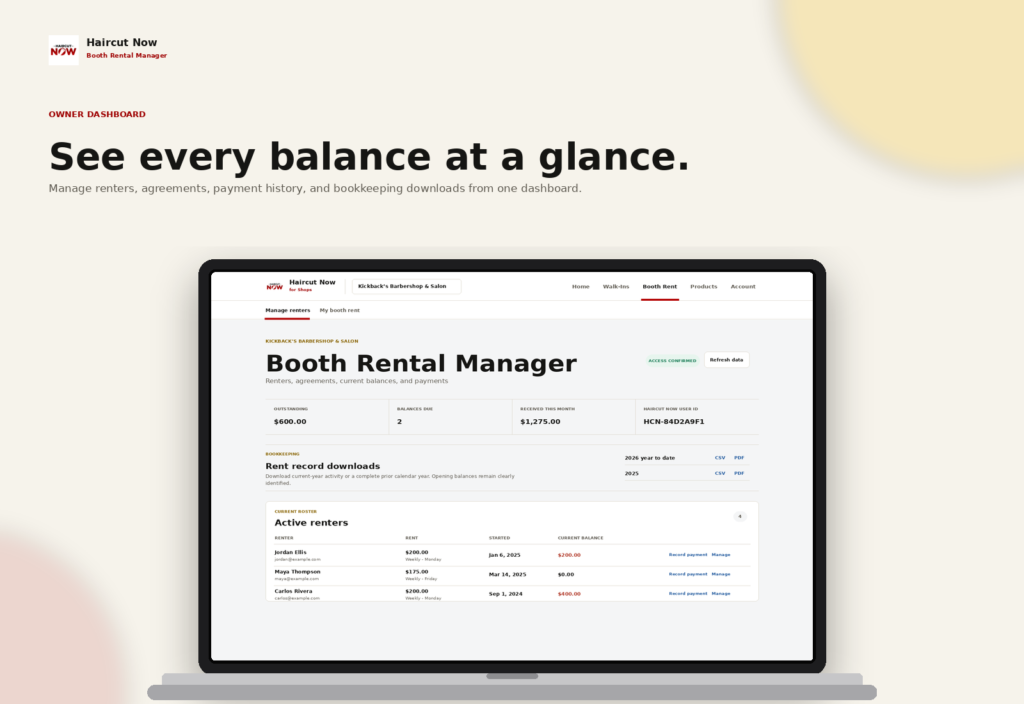
Booth Rental Manager is built for that kind of shared rent recordkeeping in an independent shop. Owners and authorized managers can track partial booth rent payments without changing how renters pay, while renters keep their own private, mobile-friendly view of agreements, charges, recorded payments, and balances.
What a clean partial-payment ledger should show
If you manage a booth-rent shop, the goal is simple: every rental agreement should be easy to understand at a glance. A solid ledger makes it obvious what was billed, what was paid, and what still needs attention.
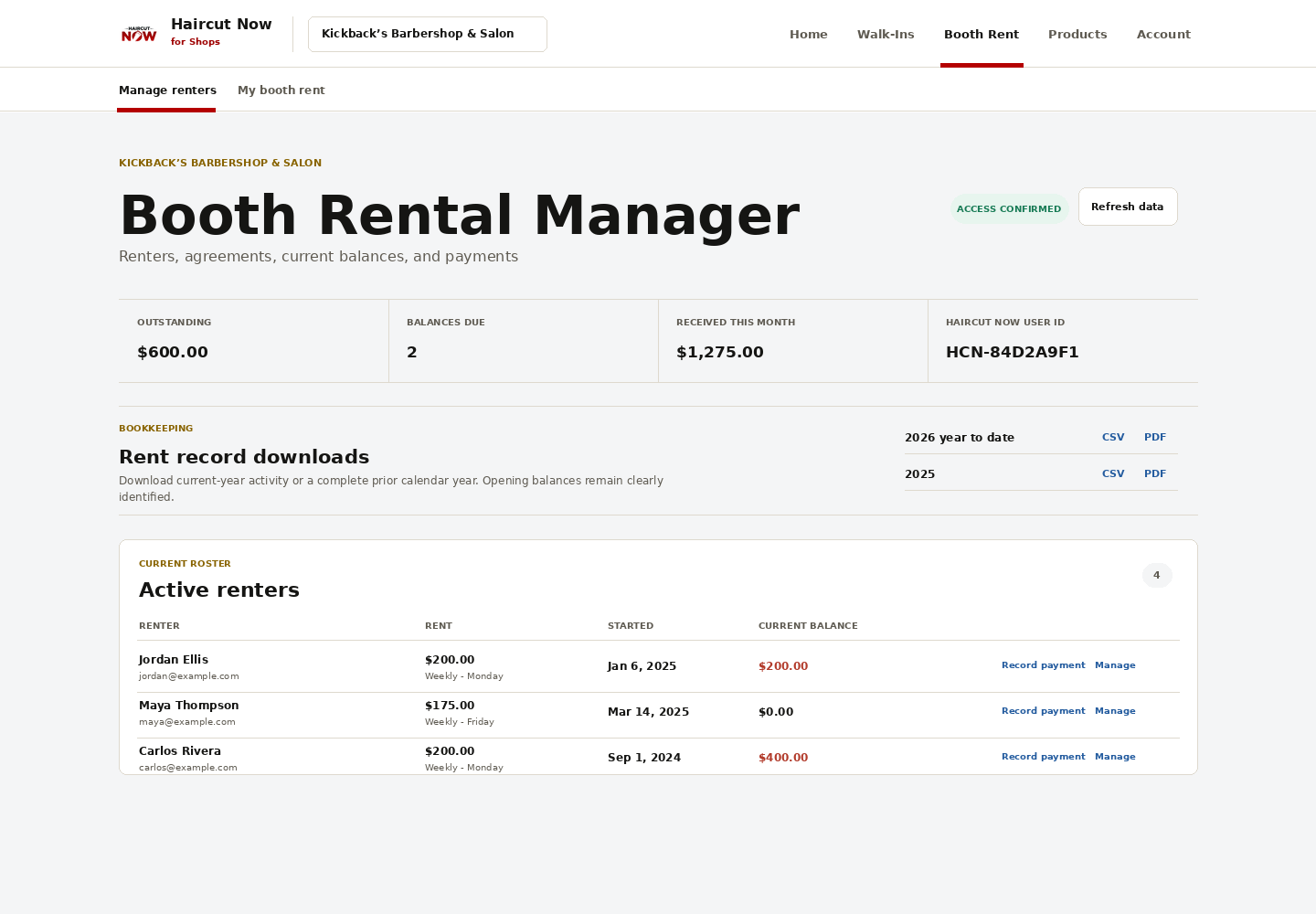
In Booth Rental Manager, the owner or manager can add renters and set weekly, biweekly, monthly, or one-time rental agreements with the amount, start date, and terms. From there, the shop can keep a running record of:
- Due amounts for each renter and agreement period
- Received payments as they come in
- Outstanding balances that are still unpaid
- Credits that can reduce what is owed later
- Corrections and applicable late fees when the ledger needs adjustment
That structure matters because partial booth rent payments are normal in real life. A renter might pay part on Monday, finish the balance on Wednesday, or apply a credit from a prior overpayment. The ledger should make those steps easy to follow without turning the shop into a spreadsheet scramble.
A practical workflow for tracking partial booth rent payments
One of the simplest ways to stay organized is to treat every payment as a ledger entry, then let the total tell the story. Here is a practical shop workflow that fits booth-rent operations well:
- Start with the agreement. Add the renter, the rental amount, the start date, and the payment terms.
- Record what is due. Keep the current charge visible so the balance is never buried in notes or text threads.
- Log each payment as it is received. If a renter pays part of the rent now and the rest later, record both entries rather than waiting for the full amount.
- Apply credits or corrections when needed. This keeps the ledger accurate if a prior overpayment, adjustment, or late fee affects the balance.
- Review the outstanding amount. The unpaid portion stays visible until it is fully satisfied.
This approach helps owners avoid the common “I thought it was covered” problem. Instead of relying on memory, you have a shop-wide ledger that shows the current status for every renter.
How renters stay informed without disrupting their independence
Booth-rent shops work best when renters can keep using their own payment methods and still know where they stand. Booth Rental Manager supports that independence by giving renters a private, mobile-friendly view of their agreements, charges, recorded payments, and balances.
That means the renter does not need to hand over control of their business just to stay current on rent. They can see what has been recorded and, when needed, report a payment for owner or manager confirmation. The owner can also record payments directly in the ledger.
This split keeps the process practical for busy shops. A renter can send payment through the method they already use, and the shop can still keep an accurate record of when it was received and how it affects the balance.
Why this is better than chasing rent in text messages
Many booth-rent owners start with good intentions and end up tracking payments across texts, screenshots, and notebooks. That works until the shop gets busy or the same renter pays in parts more than once in a month.
A shared rent ledger gives you one place to review the details. Instead of searching through conversations, you can look at the renter’s record and see the amount due, the payments received, the outstanding balance, and any credits or corrections already applied.
For a booth-rent shop owner, that saves time in three practical ways:
- You spend less time answering “What do I still owe?” messages.
- You reduce mistakes caused by informal tracking.
- You have cleaner records for bookkeeping and end-of-year review.
Use the ledger for bookkeeping, not just reminders
Partial booth rent payments are easier to manage when the ledger doubles as a recordkeeping tool. Booth Rental Manager can export current-year or prior-year statements in PDF and CSV format, which is useful when you want clean records for your files or accountant.
That’s especially helpful for shops with multiple renters, because the system supports unlimited renters at one location without per-renter charges. If your shop is growing, you do not have to rebuild your rent process every time you add another chair.
In day-to-day use, the ledger can also help you spot patterns. For example, you may notice when a renter is regularly paying in two parts, or when a balance is being carried forward due to a credit or correction. That visibility makes conversations clearer and less awkward because you are discussing a record, not a guess.
General advice for cleaner rent tracking in a booth-rent shop
These are general operations habits that work well alongside a rent ledger:
- Choose one standard due date or billing rhythm for each agreement type.
- Record payments as soon as they are confirmed.
- Keep notes on credits and corrections short and specific.
- Review outstanding balances on a regular schedule instead of waiting until month-end.
- Use the same process for every renter so no one is tracked differently from everyone else.
Those habits are not software features by themselves, but they make any ledger system easier to trust and easier to maintain.
Who benefits most from Booth Rental Manager
This product is a strong fit for independent booth-rent barbershops and salons that want a shared rent ledger without turning rent collection into a full-time task. Owners and authorized managers get a shop-wide view of balances, payments, and credits, while renters keep their own payment methods and a private view of their records.
If your shop uses walk-in operations as well, Booth Rental Manager can combine with Walk-In Manager as Shop Operations. That lets an owner keep rent tracking and walk-in coordination in one Haircut Now setup without blending the two workflows.
If you want a clearer way to track partial booth rent payments, start here: Booth Rental Manager.
FAQ
Can Booth Rental Manager track partial booth rent payments?
Yes. The owner or authorized manager can record partial payments, along with due amounts, outstanding balances, credits, corrections, and applicable late fees.
Does the system collect the rent for me?
No. It is a rent recordkeeping tool. Renters keep paying through their existing methods, and the ledger records what was received.
Can renters see their own rent history?
Yes. Renters have private, mobile-friendly views of their agreements, charges, recorded payments, and balances.
What if a renter wants to confirm a payment?
The renter can report a payment for owner or manager confirmation, and the owner can also record payments directly in the ledger.
Can I export rent records for bookkeeping?
Yes. Booth Rental Manager supports current-year and prior-year PDF and CSV statements.