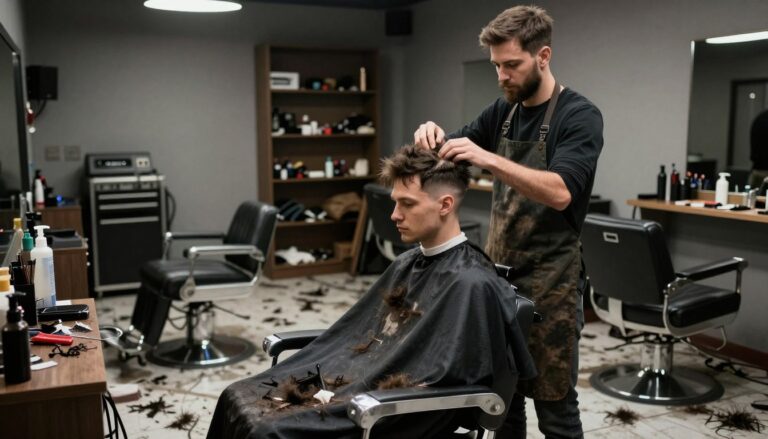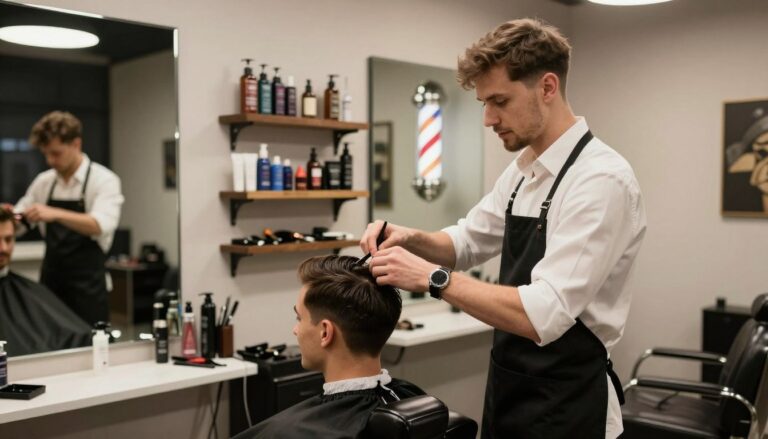
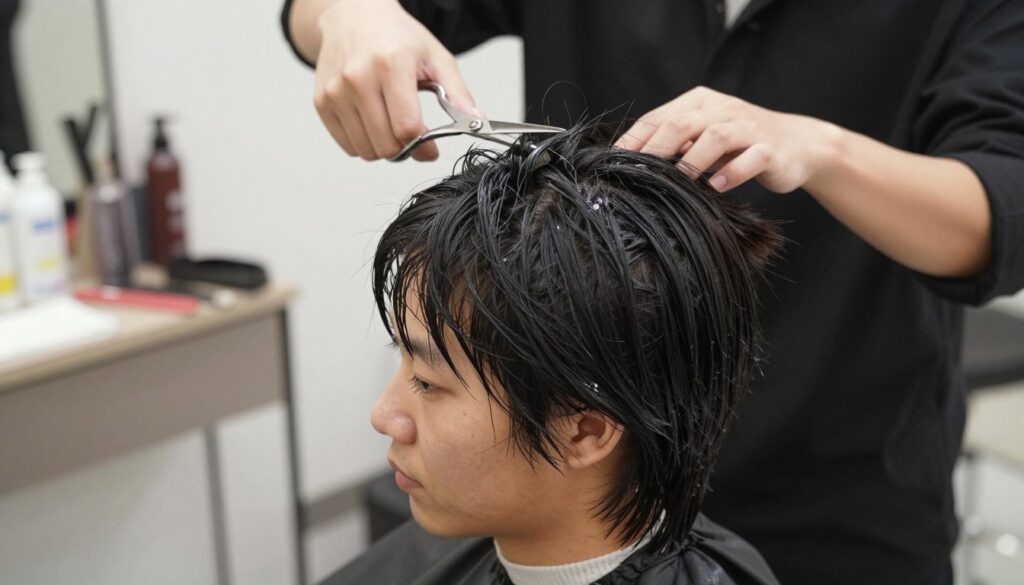
Have you ever wondered how the cleanliness of your hair impacts your haircut? This question is more common than you might think. The state of your hair can significantly affect the outcome of your salon visit.
Arriving with clean hair provides your stylist with a clear view of your natural texture and growth patterns. When hair is oily or coated with products, it can clump together. This makes it challenging for the barber to see how your hair truly falls and moves.
Professional recommendations suggest that clean hair leads to a more precise and flattering cut. Reputable salons emphasize the importance of this aspect. Understanding the relationship between hair cleanliness and cutting precision is essential for achieving the best results.
Understanding the Importance of Hair Cleanliness Before a Haircut
A clean head of hair is essential for achieving the best possible haircut. The cleanliness of your hair can significantly influence the results of your haircut. When hair is free from dirt and product buildup, it allows your stylist to assess its natural texture and behavior accurately.
Why Hair Cleanliness Matters
Hair cleanliness is a foundational element of the haircutting process. It directly influences how accurately your stylist can evaluate your hair’s natural characteristics. Clean hair allows for precise sectioning, enabling the stylist to see how your hair falls and moves.
When hair is clean and free from buildup, strands separate naturally. This gives the stylist an honest representation of your hair’s volume and movement. In contrast, natural oils and product residue can cause hair strands to stick together. This creates a distorted appearance that may lead to inaccurate cutting assessments.
How Hair Condition Affects the Haircut Outcome
Dirty hair coated in oil or styling product can stretch and resist clean separation when combed. This results in uneven cutting angles and inconsistent weight distribution throughout the finished haircut. A haircut built on clean, evenly distributed sections is more likely to hold its shape over time.
Arriving with clean hair also shows respect for your stylist. It ensures that tools like scissors and combs can move smoothly through your hair without transferring oils and residue. Even small inconsistencies during cutting can become pronounced once the hair is dry and styled at home.
Understanding how hair condition affects the cutting outcome empowers you to prepare properly for your appointment. This preparation sets the stage for a successful collaboration between you and your stylist.
Should You Wash Your Hair Before a Haircut? Key Considerations
The choice to wash your hair before a haircut can greatly influence the outcome. Several factors come into play, including your hair type, the complexity of the desired cut, and your stylist’s preferences.
Hair type and texture are significant considerations. Straight, fine hair often shows oil more quickly than curly or coily hair. This can affect how your hair looks and feels during the cutting process. Clean hair allows your stylist to assess its natural texture and behavior accurately.
Hair Type and Texture
Different hair types respond uniquely to washing. For instance, wavy or curly hair requires washing before a haircut to reveal its true curl pattern. This ensures that the stylist can cut accurately, avoiding unexpected length loss after washing.
On the other hand, straight and fine hair may not need to be washed on the same day. However, it should still be clean and free from heavy products that could weigh it down. A clean canvas helps the stylist achieve the best results.
Haircut Style and Complexity
The complexity of your haircut style also plays a role. Detailed cuts like layers, fades, or textured styles require a clean base. This allows the stylist to create sharp lines and precise blending.
The myth that dirty hair holds better for a cut has been debunked by professionals. Excess oil and product buildup can hinder precision, leading to a haircut that may not match your expectations once you wash and style it at home.
Ultimately, considering your hair type and the specific cut you want will help you determine the best washing timeline. Arriving prepared sets the stage for a successful appointment.
Is it Better to Have Washed or Unwashed Hair Before a Haircut?
Many people overlook how hair cleanliness can shape their haircut experience. The straightforward answer is that washed hair is almost always the better choice for achieving a precise, professional-quality haircut. Clean, freshly washed hair provides your stylist with an unobstructed view of your natural texture, volume, and growth patterns.
These elements are essential reference points for creating a cut that flatters your unique hair characteristics. When hair is clean, strands separate naturally and fall into their authentic shape. This allows the stylist to accurately assess balance, weight distribution, and movement before making the first cut.
On the other hand, dirty hair coated in oil and product residue can clump together. This can make hair appear flatter than it actually is, hiding the true volume and texture that should inform the cutting strategy. Stylists working with clean hair are far more likely to achieve cleaner lines, more consistent blending, and a more even finish.
The benefits of arriving with freshly washed hair extend beyond the cutting process itself. Clean hair allows tools to move smoothly and prevents the transfer of oils and residue onto combs, scissors, and clippers. While there are specific scenarios where slightly lived-in hair is acceptable, the general rule across professional salons is that washed hair leads to superior results.
For structured styles, detailed cuts, and transformative looks, making the effort to arrive with clean hair demonstrates respect for your stylist’s craft. This preparation sets the stage for a collaborative experience that produces a haircut you will be happy with long after leaving the salon chair.
How Timing of Washing Impacts Your Haircut
The timing of your pre-haircut wash can significantly impact how your hair behaves in the stylist’s hands. Understanding the optimal window for washing helps you prepare effectively for your appointment.
Washing on the Same Day
Washing your hair on the same day as your haircut is ideal for layered cuts, precision styles, or any detailed service. This approach allows the stylist to see your hair’s natural fall and movement without interference from oils or products.
Same-day washing is especially important if your hair feels oily, sweaty, or coated in styling product. These substances can distort your hair’s true texture, leading to inaccurate cutting decisions that affect the final result.
If you’re getting color or highlights along with your cut, washing 12 to 24 hours before your appointment is often recommended. This timing ensures your hair is clean while allowing natural scalp oils to form a protective barrier against irritation.
Washing the Night Before or Earlier
Washing your hair the night before is usually sufficient for most standard haircuts. The hair remains clean while settling into its natural shape overnight. This gives the stylist an accurate representation of how your hair behaves in everyday conditions.
If your hair is naturally fine or straight, washing one or two days prior is typically acceptable. Just ensure your hair is not weighed down with heavy styling products or excessive oil.
The key principle behind wash timing is to avoid arriving with noticeable buildup while ensuring your hair is completely dry before the appointment. Wet hair can stretch and appear longer than it actually is when dry.
Adjusting your wash timing based on your haircut type and current hair condition ensures that your stylist has the clean, accurate starting point needed for consistent, high-quality results.
Preparing Different Hair Types for a Haircut
Understanding how to prepare your hair before a haircut is essential for achieving the best results. Different hair types require tailored approaches to washing and styling. Knowing how your specific hair texture responds to washing helps you arrive at the salon in optimal condition for cutting.
Straight, Fine, and Thin Hair
Straight, fine, and thin hair types often show oil quickly. For these hair types, washing the night before can be beneficial. Slight natural oils can provide grip and control during the cutting process without causing heaviness or misalignment.
It’s important that fine hair remains clean but not overly stripped of its natural oils. Hair that is too fluffy or dried out from harsh shampooing may not accurately represent how it normally looks and feels.
Curly, Wavy, and Coily Hair
Curly, wavy, and coily hair types benefit significantly from being freshly washed before a haircut. Clean hair reveals the true curl pattern, shrinkage, and natural movement that your stylist needs to assess for accurate shaping and layering.
Styling gels, creams, and leave-in products can dramatically alter how curls appear. Washing beforehand removes these artificial influences, allowing the stylist to see the authentic curl formation that should guide the cutting strategy.
Clients with curly or coily hair should avoid ponytails, buns, clips, or any tight styling after washing and before their appointment. These can disrupt the natural curl pattern and lead to cutting decisions based on stretched or distorted hair.
Dry and Fragile Hair
If your hair is dry or fragile, focus on gentle preparation rather than frequent washing. Use mild, sulfate-free shampoos and avoid heavy styling products. This approach minimizes stress on already vulnerable strands.
Regardless of your hair type, the universal goal is to arrive with hair that is free from heavy buildup and close to its natural state. This gives your stylist the clearest possible picture of your hair’s true structure and behavior.
The Role of Hair Products and Build-Up in Haircuts
The products you use on your hair can greatly affect the quality of your haircut. Styling products like pomades, gels, and hairsprays create a coating that can mask your hair’s natural texture. This interference can lead to a less precise cut, making it crucial to arrive with clean hair.
When products build up, they can cause hair strands to stick together. This can make your hair appear flatter and denser than it truly is. As a result, your stylist may make cutting decisions based on a distorted view of your hair’s actual volume and movement.
Effects of Styling Products
Heavy styling products can create physical resistance during the cutting process. This resistance makes it difficult for the stylist to comb, section, and cut your hair accurately. Clean hair allows for smooth cutting, leading to clean lines and even blending.
Additionally, residue from styling products can transfer onto your stylist’s tools. This dulls scissors and clippers over time, slowing down the cutting process and affecting precision. Therefore, washing out all product buildup before your appointment is vital.
How Buildup Influences the Stylist’s Work
Dry shampoos, serums, and leave-in conditioners can accumulate on your hair and scalp, creating a layer of buildup. This layer hides your natural texture and complicates accurate sectioning for the stylist. Even invisible residues can affect how your hair falls and moves.
The oils naturally produced by your scalp can mix with styling products, forming an even heavier coating. This combination can weigh your hair down, making it cling together and further obscuring its natural volume. Arriving with clean, product-free hair is essential for any detailed or precision-based haircut.
Taking the time to thoroughly wash out all product buildup before your appointment is one of the most impactful steps you can take. This preparation ensures your stylist has the clean, accurate canvas needed to deliver exceptional results.
Considerations When Visiting a New Stylist or Barber
Making a strong first impression is vital when visiting a new stylist or barber. Arriving with clean, well-prepared hair sets the tone for your appointment. It demonstrates respect for your stylist’s craft and shows that you value their time and expertise.
When a stylist sees your hair for the first time, they need to analyze its condition and growth patterns. Clean hair allows them to assess your natural texture and scalp health effectively. This understanding helps them approach your cut with confidence and precision.
Making a Good First Impression
Clean, detangled hair is essential for establishing a positive professional relationship. It signals that you are ready for the service you are requesting. At Five Star Barber, for instance, barbers use the first cut to understand your preferences and scalp health. Clean hair makes this assessment easier and more efficient.
Communicating Your Hair Washing Routine
Open communication about your hair washing routine is crucial. Discussing this with your stylist helps them understand how your hair behaves. This knowledge allows them to recommend a cut that fits seamlessly into your lifestyle.
Different salons and stylists may have varying preferences. It’s often best to ask your stylist what they prefer before your appointment. Questions worth asking include whether you should come with clean hair or if your hair will be washed before the cut. Building a foundation of clear communication leads to a more comfortable and collaborative experience.
Washing Your Hair After a Haircut: Best Practices
Post-haircut care is just as important as preparation before your appointment. Knowing how to wash your hair after a haircut can enhance your overall experience and maintain the integrity of your new style.
After your haircut, you might want to wash your hair to remove any tiny, itchy cut hairs that can linger on your neck and scalp. This is especially true if clippers or scissors were used during your service. A gentle wash can also soothe freshly shaved or faded areas, refreshing your scalp.
Immediate Washing vs. Waiting
If your stylist has already washed and styled your hair as part of the service, you may not need to wash it immediately. However, if loose hair bothers you, a quick rinse can help. For those who have received chemical treatments, such as coloring or perming, it’s essential to wait at least 24 to 48 hours before washing. This waiting period allows the product to set properly and protects your investment.
Special Care After Chemical Treatments or Fades
When washing after a skin fade or razor cut, use a gentle, non-stripping shampoo with lukewarm water. Avoid scrubbing too hard on freshly shaved areas to prevent irritation or discomfort on sensitive skin. Following up with a soothing conditioner or scalp balm can provide additional comfort, especially for those prone to irritation after close clipper work.
Ultimately, the decision to wash immediately or wait depends on your comfort level and the type of cut you received. Establishing a thoughtful post-haircut washing routine helps maintain your new cut, keeps your scalp healthy, and ensures you enjoy your salon visit to the fullest.
Tips from Professional Stylists on Hair Preparation for Haircuts
Proper hair preparation can significantly enhance your haircut experience. Professional stylists offer valuable insights to help you achieve the best results. Here are some essential tips to consider before your next appointment.
Choosing the Right Shampoo
Using a sulfate-free, gentle shampoo is highly recommended when preparing your hair for a haircut. Harsh detergents can strip your hair and scalp of essential moisture. This can affect both texture and manageability during the cutting process.
Choosing the right shampoo ensures that your hair arrives at the salon clean but not overly dried out or fluffy. This helps to accurately represent how your hair normally looks and behaves on a daily basis.
Avoiding Heavy Products on Cut Day
One of the most important tips from experienced stylists is to avoid applying any heavy styling products on the day of your cut. Products like waxes, gels, pomades, or hairsprays create resistance. This makes it significantly harder for the stylist to handle your hair effectively.
Even if you style your hair daily, skipping these products before your appointment gives your stylist a clean, natural canvas. This allows them to assess your hair accurately and execute the cut with precision.
Consulting Your Stylist Before Your Appointment
Consulting your stylist about their specific preferences is a simple yet effective way to ensure you arrive properly prepared. Every stylist has their own method and preferred working conditions based on their training and experience.
Some stylists prefer working with freshly washed hair, while others may favor slightly lived-in texture for certain types of cuts. Asking this question in advance eliminates guesswork and leads to a more comfortable, collaborative experience.
For clients booking styling appointments like blowouts or braids, second-day hair often holds a style better than freshly washed hair. Confirming this preference with your stylist beforehand is always the safest approach.
Simple, thoughtful preparation following professional guidance helps your stylist work more efficiently. This reduces time spent in the chair and consistently leads to better results that match your expectations.
Conclusion
In conclusion, the evidence from professional stylists and barbers is clear: arriving with clean, washed hair is essential for achieving a precise and flattering haircut. Clean hair allows your stylist to see your natural texture, volume, and growth patterns, which are crucial for creating a cut that complements your unique characteristics.
While you may not be turned away for unwashed hair, it introduces variables that can compromise the quality of your experience and the precision of your cut. Adjust your washing routine based on your hair type and the complexity of your desired style. When in doubt, consult your stylist about their preferences.
By avoiding heavy styling products and choosing gentle shampoos, you can demonstrate respect for your stylist’s craft. Ultimately, investing time in arriving with clean hair ensures you leave the salon looking and feeling your best, with a style that remains easy to maintain in the days ahead.
FAQ
Should I wash my hair before my haircut appointment?
Yes, washing hair before a haircut is generally recommended. Clean hair allows stylists to see the natural texture and condition, which helps in achieving the desired look.
What if I have oily hair? Should I still wash it?
If your hair is oily, it’s best to wash it before the appointment. Excess oil can affect the cutting process and the final style.
Does the timing of washing matter?
Yes, washing hair on the same day as the haircut can provide the best results. It ensures that hair is clean but not overly dry from styling products.
Can I go to the salon with dirty hair?
While some stylists can work with dirty hair, it’s usually better to arrive with clean hair. Dirty hair may hinder the stylist’s ability to see how the hair falls and moves.
How does my hair type affect whether I should wash it?
Different hair types may require different approaches. For example, fine hair may need washing to remove oils, while textured hair may benefit from leaving some natural oils.
What products should I avoid using before a haircut?
Heavy styling products should be avoided before a haircut, as they can create buildup and make it difficult for the stylist to cut effectively.
How can I prepare my hair if I’m seeing a new stylist?
Communicate your hair washing routine with the new stylist. This helps them understand your hair’s condition and how best to work with it.
Should I wash my hair after a haircut?
It’s advisable to wait at least 24 hours after a haircut before washing to allow the cut to settle and any products used to work effectively.
What shampoo is best for preparing hair for a haircut?
A gentle, sulfate-free shampoo is ideal for preparing hair. It cleans without stripping essential oils, keeping hair healthy for styling.
How can I ensure the best results from my haircut?
Arrive with clean, dry hair, avoid heavy products, and consult with your stylist about your hair care routine for optimal results.
Fade Haircuts: Complete GuideFade Haircuts: Complete GuideHaircut Now: Revolutionizing Same-Day Haircut Appointments