Have you ever stared at a payment screen and felt a sudden jolt of social anxiety? In 2026, you might wonder whether your local barbershop expects more than you can afford. This quick barbershop tipping guide helps you navigate modern tipping culture so you can make confident choices at checkout.
While tipping norms differ worldwide — and some countries like Australia have higher award wages — American tipping etiquette for barbers remains distinct. Recent surveys show many clients feel tipping expectations have risen quickly. Use this guide before your next barber appointment so you know when a tip is expected and how to handle the checkout prompt.
Knowing the current etiquette protects the relationship between you and your barber. Even as prices rise, understanding when tipping matters and when it’s optional can reduce stress. Read the quick answers below and keep this page handy before your next cut.
Key Takeaways
- Quick answer: In the U.S., a standard barbershop gratuity is generally 15%–20% for a typical haircut.
- Tipping customs vary by country — Australia and Japan follow very different rules.
- “Tipflation” (more frequent tip prompts) has left many clients feeling pressured.
- Checkout prompts and social norms often influence how you respond at the counter.
- Knowing acceptable situations to skip a tip helps you manage your budget without awkwardness.
The Evolving Landscape of Barbershop Tipping Culture
The way you handle tips at the barbershop has changed a lot in recent years. What used to feel like a simple thank-you has become more complicated as digital payment screens and shifting expectations pop up at the register. That change affects how much you leave, how you feel after the appointment, and how barbers manage their income.
Social rules around tipping are no longer straightforward. You’re navigating a more complex tipping culture now — and a little knowledge helps you avoid awkward moments at checkout.
How tipping expectations have shifted in recent years
Surveys indicate many Americans notice more tipping prompts across everyday purchases. You may see this trend from coffee shops to barbershops: preset percentages on tablets that nudge you to add a gratuity even when the base service cost is rising.
It helps to know how different countries handle barbershop tipping so you can set expectations when you travel. While tipping is a common practice in the United States, other countries follow very different customs.
| CountryExpectation LevelStandard Etiquette | ||
| United States | High | 15% to 20% is standard for haircuts |
| United Kingdom | Moderate | 10% or round up the bill at barbershops |
| Australia | Low | Not expected; higher wage awards reduce reliance on tips |
| Japan | None | Tipping can be misunderstood; polite refusal or a small gift is more common |
The “tipflation” debate and rising costs
The buzzword “tipflation” describes how tipping options have spread into more transactions and often into digital prompts. Those tablet screens at the register can make checkout feel tense: you might be choosing a percentage while your barber or an assistant waits nearby.
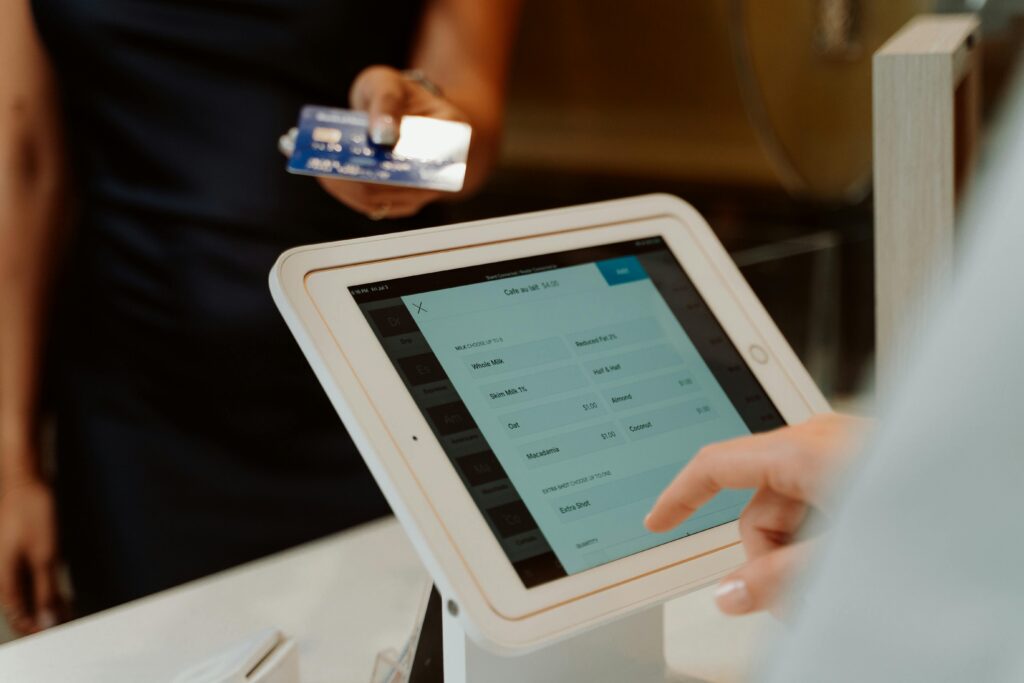
Inflation and higher operating costs have pushed many shops to raise prices, and a percentage-based tip rises along with them. That double hit creates financial pressure for clients who want to support their barber but are watching their budgets.
“The current culture of constant gratuity requests is leading to consumer fatigue across the country.”
Online debates amplify the confusion: some argue tipping is essential for barbers’ pay, while others believe base prices should cover all labor. If you’re traveling, check local barbershop tipping norms ahead of time so you aren’t caught off guard.
Is it rude not to tip for a haircut?
Whether skipping a tip is rude depends on several things: the quality of the cut, the barber’s pay setup, and local expectations. If you received a poor result, many patrons feel reducing or skipping a tip is an appropriate response — but how you handle it matters more than the dollar amount.
You should also consider the barbershop’s local culture. Some barbers have moved to higher upfront prices so they don’t rely on tips, while others still depend heavily on gratuities. Knowing which model your barber uses helps you decide what’s fair.
The reality of barber compensation in America
Understanding how a barber earns a living clarifies why tips often matter. In the U.S., barbers can be paid in different ways, and each model affects how much of your payment goes directly to them.
| Pay Model | Income Source | Supply Costs | Income Stability |
|---|---|---|---|
| Commission / Split | Often paid by the owner | The owner covers supplies | Moderate |
| Booth Rental | All service fees go to the barber | Barber pays products & rent | Low / Variable |
| Hourly / Salary | Fixed wage | Owner covers supplies | Higher / More stable |
Barbers who rent chairs rely on every dollar to cover rent, tools, and products. Employees on hourly pay may be less dependent on tips, though gratuities still boost take-home pay. If you’re unsure which model your barber uses, a polite question or a quick online check of the shop can help.
What industry pros say about non-tippers
Barbers’ opinions vary. Some set prices so they don’t expect tips and treat gratuities as bonuses. Others — especially junior barbers or assistants — may rely on tips as a significant portion of income. Anecdotally, some pros say they don’t mind if a client skips a tip; others see tips as an important sign of respect for their skill and time.
“If the result meets expectations, a tip shows appreciation. If it doesn’t, communicate — ask for a fix before you decide on the tip.”
If you’re unhappy with a cut, the most constructive steps are: 1) tell the barber calmly and give them a chance to fix it, 2) ask to speak with the shop owner/manager if needed, and 3) decide on a reduced tip or no tip only after you’ve tried to resolve the problem. Leaving clear feedback is better for everyone than a silent non-tip.
When tipping is expected in U.S. barbershops
Understanding when tipping is expected is a core part of the American barbershop experience. Showing appreciation for your barber helps maintain a professional relationship — many barbers still rely on gratuities to supplement their base income.
Standard tipping percentages by service type
How much to tip depends on the time and complexity of the service. Use these barbershop-focused guidelines when you’re deciding what amount to leave after a cut, beard trim, or color touch-up.
Basic haircuts: 15–20%
For a standard men’s haircut, plan on 15–20% of the service price. For example, on a $40 cut, a 20% tip is $8. If you get a quick trim but the result is excellent, leaning toward the higher end is a simple way to show appreciation.
Beard trims, color touch-ups, and complex treatments: 20–25%
Technical services such as beard coloring, grey blending, or scalp/colour work often require more time and product skill. For those, 20–25% is appropriate. Keratin or smoothing treatments (when offered at barbershops) also fall into this higher bracket because sessions can take much longer.
Styling and quick blow-drys: 10–15%
Simpler styling services that take less time generally merit a smaller tip. If you’re getting a quick style before an event, 10–15% is a fair range — but bump it up if the barber goes the extra mile to make it last.
Don’t forget barbershop assistants or apprentices
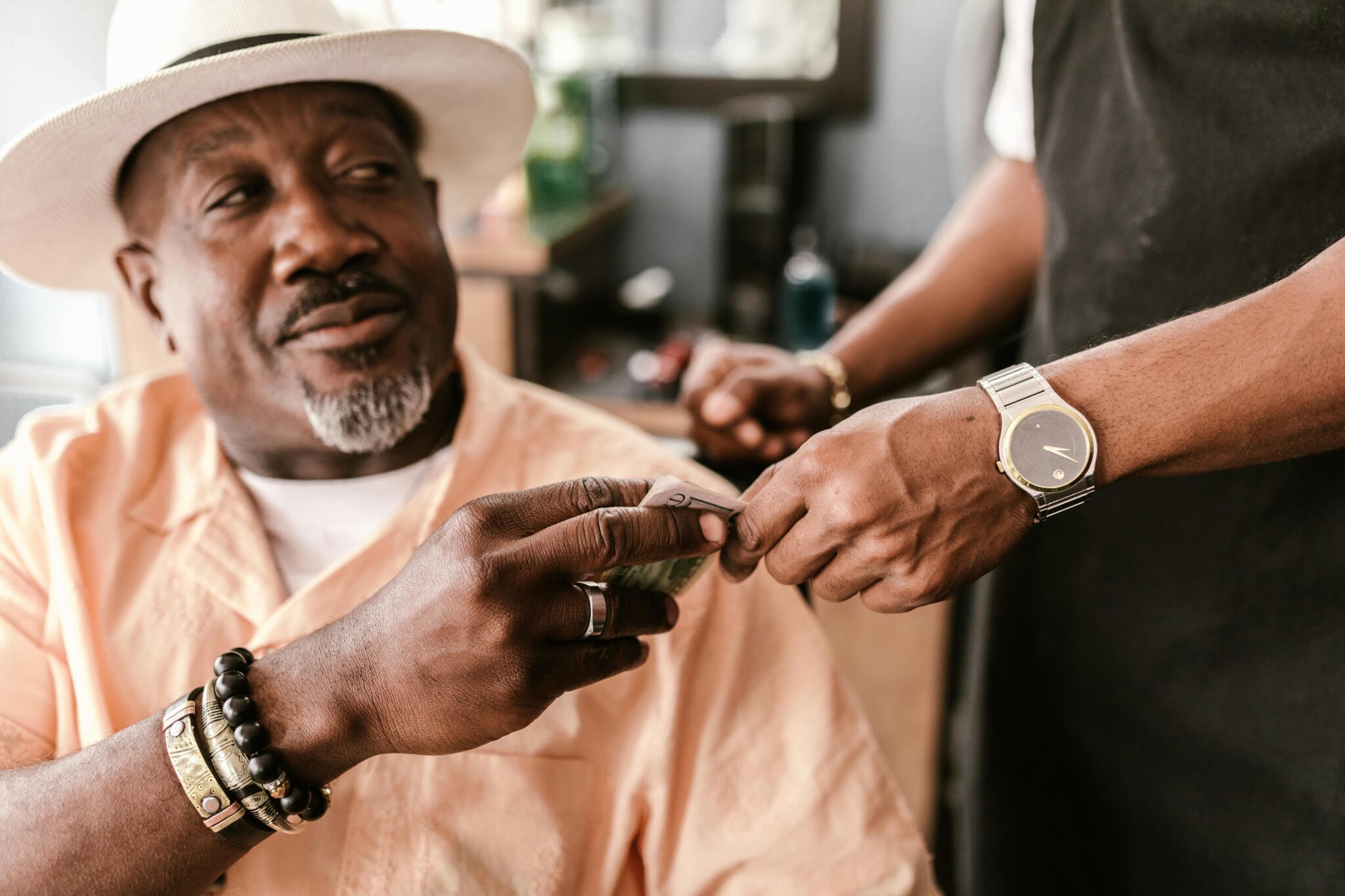
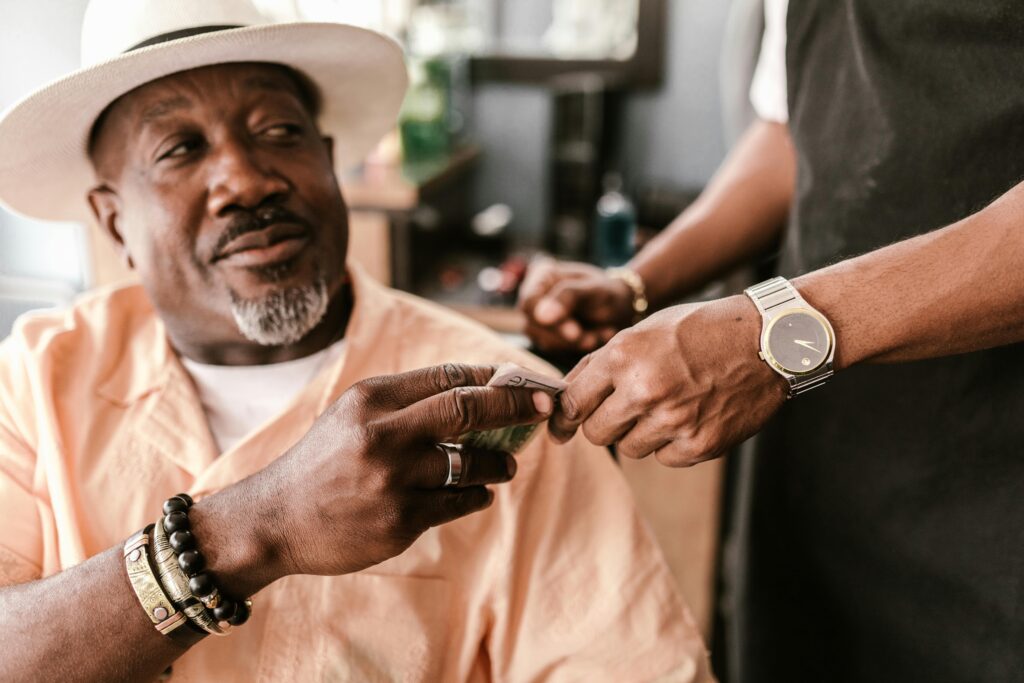
Assistants who shampoo, help with color applications, or handle prep work often appreciate a flat cash tip. A typical range is $5–$10, depending on effort and time. If you tip by card at the register, check whether the shop splits tips electronically or prefers cash for immediate distribution.
“A small cash tip for assistants goes a long way — it’s immediate and directly supports the team.”
To make tipping easier, here’s a compact reference table for common barbershop services:
| Cash is preferred for small amounts | ||
| Basic Haircut | 15% – 20% | Cash or Card (check split policy) |
| Beard Trim / Touch-up | $5 – $10 or 15% | Cash preferred for small amounts |
| Color / Grey Blending | 20% – 25% | Cash preferred |
| Keratin / Long Treatment | 20% – 25% | Cash preferred |
| Styling / Blow-dry | 10% – 15% | Cash or Card |
Quick tip: if you split services (haircut + beard trim), calculate the tip on the total bill or tip a flat amount for the additional service (for example, 15–20% of the haircut plus $5 for the beard). If you’re unsure about a shop’s tipping policy, ask at booking or when you arrive — most barbers appreciate the clarity.
When skipping a tip might be acceptable
Sometimes skipping a gratuity is the reasonable choice. While tipping is encouraged, certain service experiences or personal circumstances mean leaving only the base amount isn’t automatically a rude tip — especially when you handle the situation respectfully.
Subpar service or unsatisfactory results
If the haircut or beard job doesn’t meet your expectations, start with honest, calm feedback. Ask the barber to fix the issue or request a short follow-up appointment. If they refuse to correct a clear mistake, reducing or withholding the tip is understandable — but use communication first, not silence.
| Service QualityTipping ActionRecommended Step | ||
| Excellent | 20% or more | Leave a positive review |
| Standard | 15% – 20% | Rebook next visit |
| Subpar | 0% – 10% | Talk to the owner/manager or ask for a redo |
Budget constraints and genuine financial hardship
Many clients face tight budgets. If you can’t afford an extra tip, that alone is a valid reason not to leave one — it’s not inherently rude. When possible, offer alternatives: a quick positive review, a social media shoutout, or a referral can help your barber almost as much as cash.
Does ownership change the tipping expectation?
Some barbershop owners set higher service prices and rely less on tips; others still expect gratuities even when they own the shop. If you’re unsure whether to tip the barber-owner, consider the time and skill required for your service. As a rule, the tip is based on the effort and outcome rather than the ownership status.
Quick scripts to give feedback politely:
- In-person: “Thanks — I appreciate the cut, but could you trim a little more around the neckline?”
- At checkout: “I’m on a tight budget today; I’ll come back for a fix if needed.”
- Follow-up message: “Thanks for today—could we schedule a short touch-up? I didn’t love the fade on the left side.”
If you ever feel unsure after a visit, follow this 3-step checklist: 1) politely request a fix, 2) speak to the owner/manager if unresolved, 3) decide the tip based on the outcome and effort to correct the issue.
Alternatives to traditional tipping that barbers value
If your budget is tight, you can still support your barber in meaningful ways. Cash tips help, but barbers also rely on digital support, referrals, and loyalty to grow their client base — actions that often have longer-term business impact than a one-time tip.
Online reviews and social media shoutouts
A detailed five-star Google or Yelp review helps your barber’s local search visibility and brings real new clients to the shop. Mention your barber by name and the specific services (e.g., “great fade and beard trim”) to make the review more useful. Posting a photo of your new cut and tagging the barbershop on Instagram or Facebook is another low-effort way to show appreciation and give free marketing.
Quick review template you can copy:
“Great experience at [Barbershop Name]. Barber [Name] gave me a perfect fade and beard trim — professional and on time. Highly recommend.”
“A glowing online testimonial often brings more long-term value than a one-time cash tip.”
Consistent loyalty and client referrals
Referring friends or family is one of the most powerful ways to support your barber — it directly increases revenue and fills their book. Rebooking future appointments instead of hopping around between shops also signals loyalty and helps your barber plan regular income.
Respecting time and shop policies
Showing up on time, canceling with proper notice, and following the shop’s policies are simple, no-cost ways to acknowledge your barber’s time. Punctual clients keep the schedule flowing and reduce stress for the whole team.
| Alternative ActionBusiness ImpactClient Effort | ||
| Google/Yelp Reviews | High (new clients) | Low |
| Referrals | Highest (direct revenue) | Medium |
| Punctuality & Rebooking | High (efficiency & loyalty) | Low |
Three low-effort ways to show appreciation if you can’t tip cash: 1) leave a 5-star review mentioning the barber by name, 2) tag the barber or barbershop when you post your haircut photo, 3) refer a friend and rebook your next visit before you leave. These actions help your barber build steady work and show genuine appreciation.
Conclusion
Whether skipping a tip is a rude move depends on the situation. In a U.S. barbershop, tipping is usually about showing appreciation for a barber’s skill and time — but it’s not a one-size-fits-all rule. Consider the quality of the cut, the time involved, and the shop’s local expectations before deciding.
Typical U.S. barbershop tipping ranges remain similar to other personal-care services: many clients leave 15%–20% for a standard haircut and 20%–25% for more complex or time-consuming work like color touch-ups or specialized treatments. These percentages are a guideline; the right amount depends on effort, outcome, and your budget.
If you’re unsure how much to tip your barber, think about the total time and skill involved. When tipping is difficult for financial reasons, alternatives such as a glowing online review, a social post tagging the barber, or referring a friend are meaningful ways to show appreciation that help build steady work for your barber.
Good communication matters more than a few dollars. If the result isn’t what you expected, ask for a fix or talk to the shop owner before you decide on the tip. Clear, polite feedback protects the relationship and gives the barber a chance to make it right.
Save this barbershop tipping cheat sheet for your next visit — it makes checkout less awkward and helps you tip confidently.