Why do some men look sharper walking out of a barbershop than in a suit? Meanwhile, others get “cleaned up” but still feel off.
In the United States, a barbershop-style haircut does more than trim the sides. It’s about structure, balance, and choosing a style that suits your hair and head shape.
Straight hair needs extra attention. It can look smooth and shiny as oils spread easily. However, it might also get flat or oily quickly. Adding texture and layers can give it a fuller, more balanced look.
This guide will show you classic and modern haircuts and how to ask for them. You’ll learn that the best men’s hair styling matches the cut to your daily routine.
Great grooming combines technique with the right tools. This means fades, tapers, and detailed work, using clippers, shears, and trimmers. The right product, like Layrite pomade or Baxter of California clay, finishes the look.
Whether it’s a neat side part or a bold crop, the goal is a sharp cut. It should look good on day one and maintain its style for weeks.
Key Takeaways
- Barbershop style haircuts depend on balance and shape, not just shorter sides.
- Straight hair can look sleek and shiny, but it may need texture to avoid a flat look.
- Classic haircuts stay popular because they work with many face shapes and routines.
- Strong results come from technique plus tools like clippers, shears, and trimmers.
- Hair styling for men is easier with the right product, from pomade to clay to sea salt spray.
- Men’s grooming improves when you know how to request, style, and maintain your cut.
Understanding Barbershop Style Haircuts
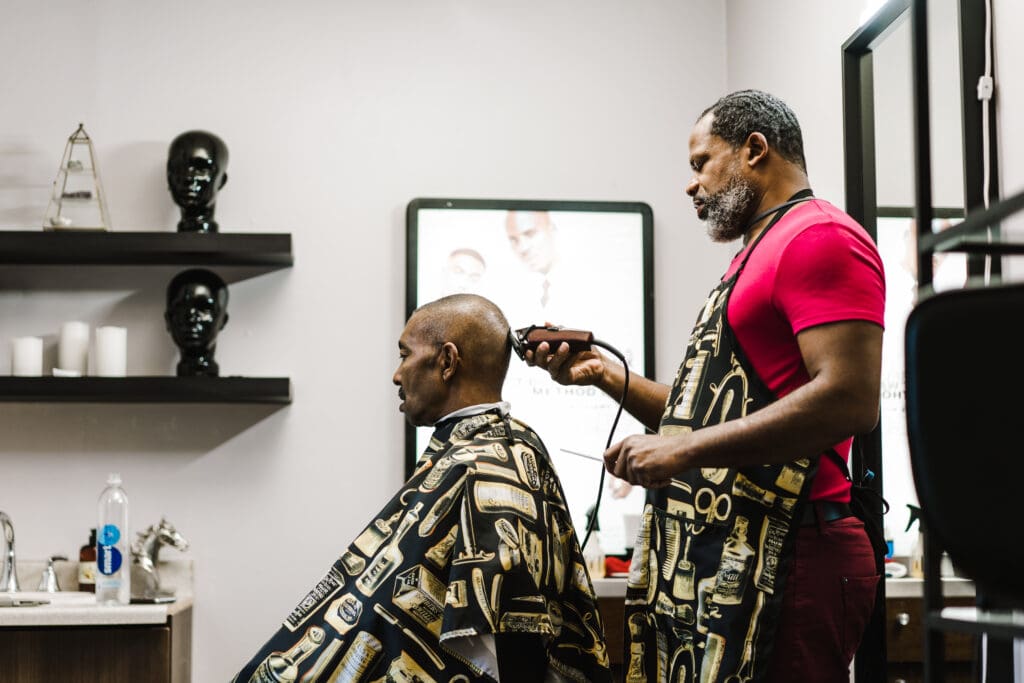
Barbershop-style haircuts are known for their sharp looks and tidy finishes. They show off neat outlines around the ears, neckline, and sideburns with smooth fading. This precise and meticulous finish is why many people prefer classic barbershop cuts today.
What is a Barbershop Style?
When we talk about “barbershop style,” it’s about the method, not just a single look. The sides might be tapered or faded, while the top is crafted to fit you. It’s all about having balanced proportions and neat edges that don’t seem too harsh.
Tapers and fades are often confused. A taper smoothly shortens hair down to the neckline. But a fade can go to the skin and normally ends above the neckline for a distinct look.
The History of Barbershop Haircuts
Stepping into an old-school barbershop, you’ll find the same focus on tidy necklines and even blends as today. Even though tools have gotten better, the aim to style a cut that looks good over time hasn’t changed. A good cut stays in shape until your next barber visit.
Remembering that a skin fade is a specific technique rather than a stand-alone style is key. Your final look depends on what style you choose for the top. This combination makes a haircut timeless or modern.
Popular Barbershop Haircut Techniques
Barbers often use a “fade map” to help explain where the shortest part of the haircut begins. This helps you get exactly what you asked for consistently.
- Low skin fade: near the hairline with an even drop behind the ears and back.
- Mid skin fade: starts around the brow, then lowers behind the ears and slightly back.
- High skin fade: begins at the forehead’s top, going up towards the crown with minimal dropping at the back.
Barbers also have special fade terms that are common in conversations. These terms describe how the blend is done, not the whole haircut.
- Drop fade: goes lower behind the ear and across the back; often seen in low and mid skin fades.
- Temple fade (taper fade): shows skin mainly at the temples and nape, with length maintained around the ear; known as a Brooklyn fade or blowout fade in certain areas.
- Burst fade: a half-circle shape around the ear, ending at the side neck and not along the nape like other fades.
- Burst taper fade: a taper fade that cuts the temple area in a burst shape.
In the background, traditional barbering involves systematic steps. Hair is sectioned off with clips for precise cuts, especially on straighter types. Barbers create fades using clippers and various guards, then fine-tune with scissors on top. This ensures the haircut flows nicely.
To prevent the top from getting too heavy, barbers might cut into the hair. This technique removes some bulk while allowing movement. They may also thin out hair for more volume. The final touch is often done with trimmers or a razor. It adds sharp details without altering the haircut’s main style.
Classic Styles That Never Go Out of Fashion
Some styles are timeless because they suit almost everyone. Classic haircuts get updated with minor changes in length and styling. Mixing these haircuts with today’s grooming trends gives you a modern yet easy style.
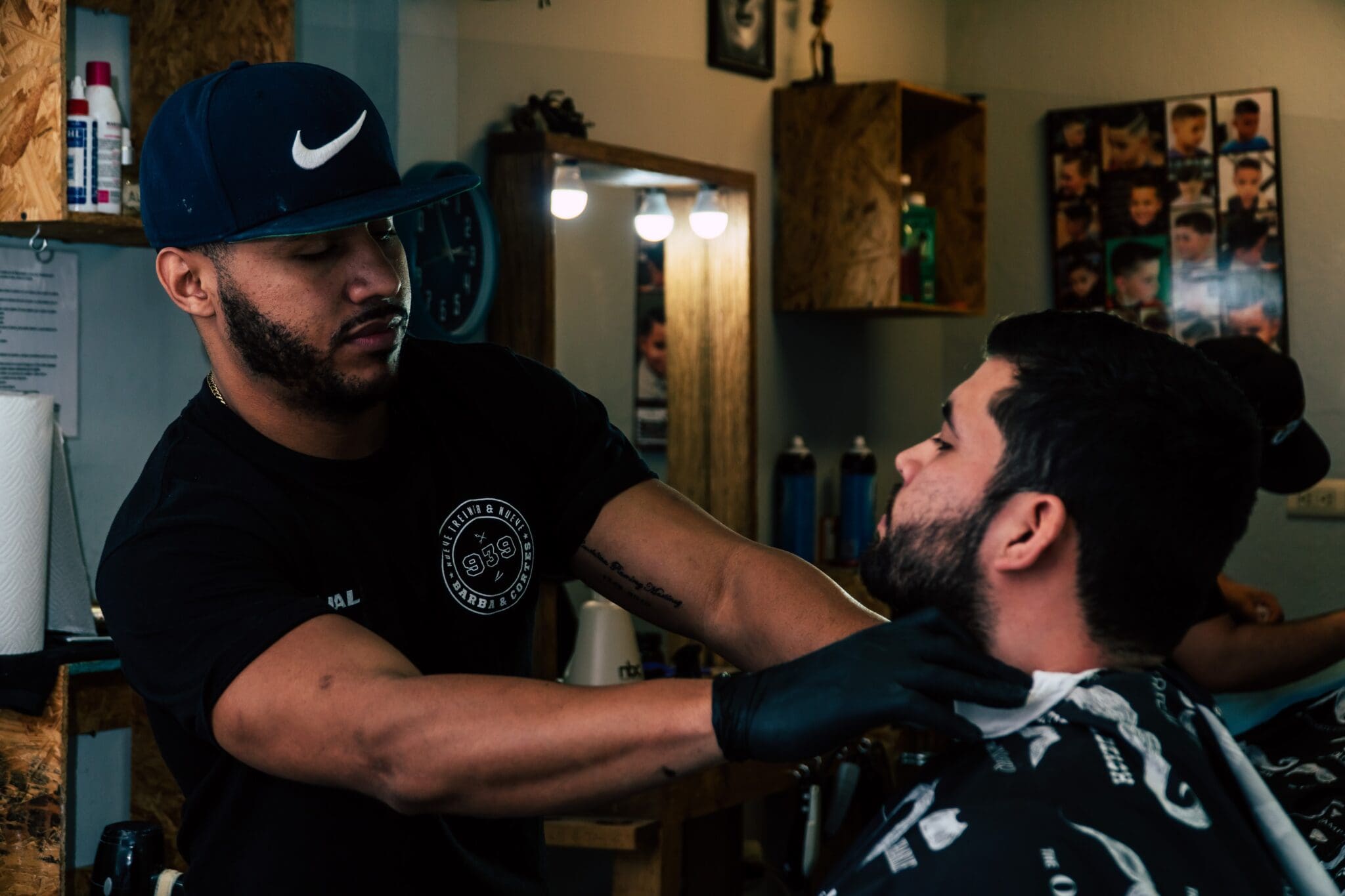
The versatility of classic haircuts comes from the fade and the style on top. Discuss with your barber the best type of fade for you, considering how each level affects the look. A low fade is subtle and suitable for work, a mid fade offers a balance, and a high fade stands out with its stark contrast.
The Timeless Fade
A clean fade looks simple and sleek. It matches well with various lengths and styles, allowing you to customize your look. Show your barber a picture to ensure they understand exactly what you want.
Remember, a fade may start to look less sharp after a couple of weeks. Schedule regular touch-ups, moisturize your scalp, and choose the right product for your hair’s needs to keep it looking sharp.
The Classic Pompadour
The pompadour is perfect for making a statement without any mess. It features high volume on top and neat, tapered sides. It pairs well with a fade for a blend of classic and contemporary looks.
To style a pompadour, use a blow dryer and a round brush for height. Then, shape it with your fingers and secure it with pomade for a look that lasts all day. Start with less product if your hair is thick, adding more only if needed.
The Crew Cut: Simple and Elegant
The crew cut remains a favorite for its sporty, effortless look. It’s characterized by a short, even length on top and a clean fade on the sides. It’s easy to keep up and looks good as it grows out, especially with neat necklines and temples.
For a bit of texture, dry your hair forward and use texture powder. This gives a natural, tidy appearance with a bit of volume. It’s the ideal choice for staying sharp between visits to the barber.
Modern Takes on Traditional Barbershop Cuts
Today’s barbershop haircuts are all about sharp lines and bold textures while keeping the classic shape. They often feature short sides with a longer top for a distinct look. These modern styles are easy to maintain at home with a few simple steps.
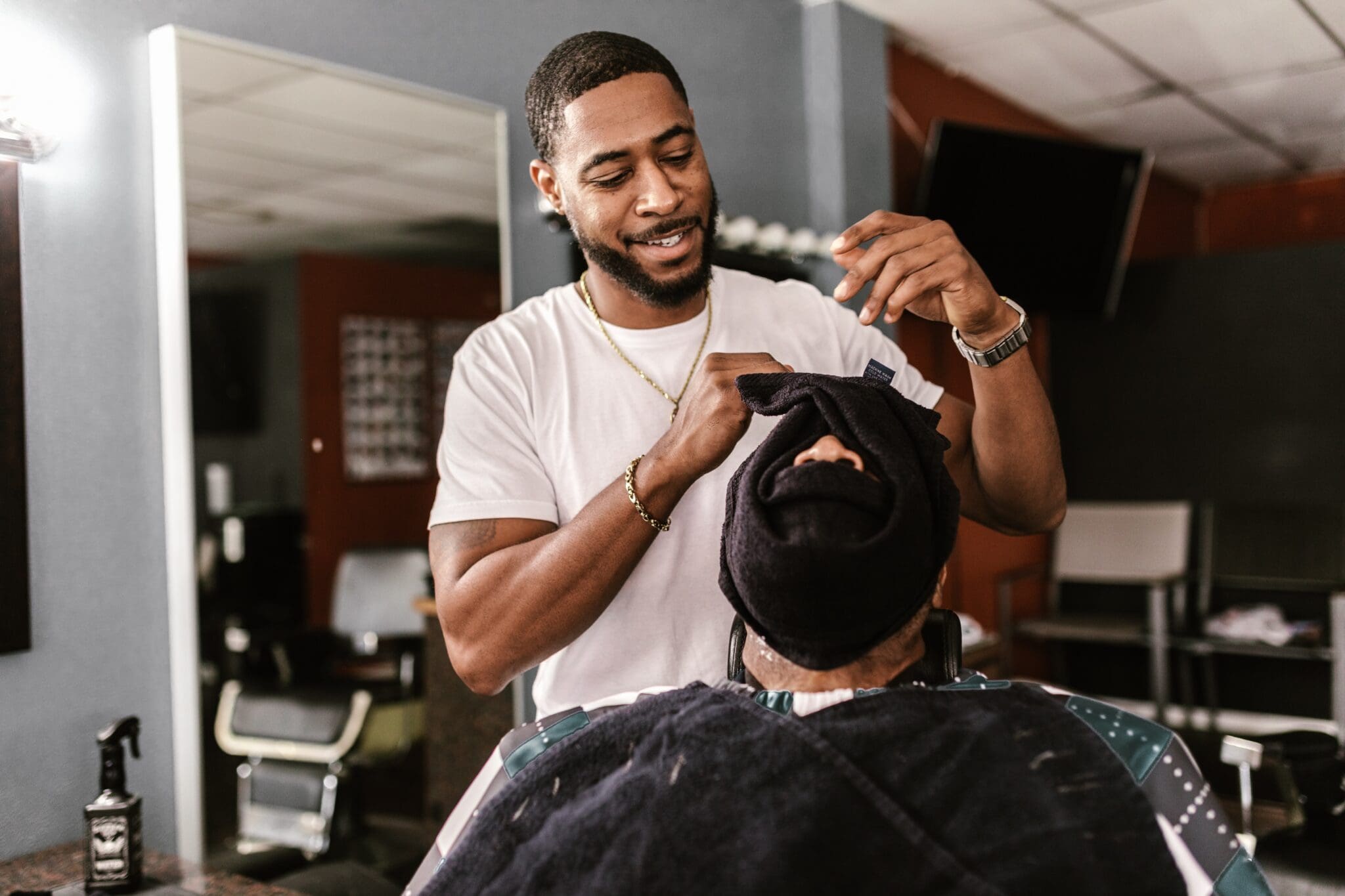
Textured Crop for a Contemporary Edge
The textured crop offers a fresh yet timeless appearance. It combines a choppy top with a neat fringe at the front. The sides are faded to highlight the texture on top, working well for straight hair.
To style it, dry your hair forward with a gentle airflow. Use texture clay to pinch bits of hair for a matte finish that stays all day. Add a high skin fade for extra impact, starting near the forehead and encircling the head.
The Undercut: Bold and Stylish
The undercut features short sides with a longer top, but with a clear division between the two. The most striking version, the disconnected undercut, shows off a crisp line between the top and sides. It’s a standout option for those enjoying clear contrasts.
For a sleek look, blow-dry your hair back and use pomade for shine and hold. To include a hard part, get a line shaved in and style to the side with pomade for definition. A comb-over requires side blow-drying for body, finished with pomade for sleekness.
Combining Elements for a Unique Look
Modern barber styles can blend different haircut elements for something special. Combining a textured top with a neat fade or a sharp part with a classic side-sweep aims for a contemporary yet timeless design. The key is choosing a style that suits your hair and looks great over time.
- Ask for sectioning for control, so the top lays where you want it.
- Have the barber blend guard lengths carefully when you want softness, or keep the break clean when you want contrast.
- Check crown growth direction to avoid awkward cowlicks that flip up.
- Outline ears and the neckline with trimmers for that fresh-from-the-chair finish.
At home, create volume by blow-drying your hair upwards. Shape the top with your fingers. Use a molding paste for a flexible hold, ensuring the style feels soft and looks natural.
Choosing the Right Haircut for Your Face Shape
Good grooming for men starts with knowing your face shape. This is because the same haircut can look great on one guy but not on another. When you go for a haircut, bring a photo and talk about your hair type and how much time you want to spend styling it every day.
Square Faces: Best Haircuts
If you have a square face, you want to soften the sharp angles but keep its strong shape. Getting layered cuts or a mid fade helps. They add contrast and keep the sides tidy.
A classic side part looks good on square faces with straight hair. You blow-dry the front up and to the side. Use a light pomade for shine and hold. For a taller style, a quiff works; you need to blow-dry upward, then use texture clay. Another good choice is a skin fade with a short, textured top. It’s easy and looks sharp but relaxed.
Round Faces: Flattering Styles
With round faces, you aim to add height not width. High fades with volume on top work well. Avoid cuts that make your head look wider, like bowl cuts or buzz cuts all one length.
To style a round face, a pompadour can look great. Use a round brush and blow-dry up, then pomade for control. Or go for a faux hawk by blow-drying upward and shaping the center. A French crop can also look good. Just blow-dry forward and use a bit of styling cream for the fringe.
Oval Faces: Versatile Options
Oval faces fit almost any haircut, from short to long styles. This means you can choose based on what works for your hair and how much time you want to spend on it. It’s easy to mix it up with different haircuts while keeping your care routine simple.
For medium hair, a middle part can look clean. You just blow-dry away from the part and use styling cream. You can also try curtain bangs brushed back and split with fingers. Use a bit of styling cream for a soft finish. If you like your hair long, try drying it back with sea salt spray for a loose look. For long straight hair, soft layers and a touch of cream will keep it looking sharp.
Square Faces: Best Haircuts
For a sharper look with a square face, get a textured top with a side-swept fringe. Use texture powder for lift. Keep the fade mid-range to prevent the sides from looking heavy.
A Caesar cut works by keeping the fringe light. Use texture clay for grip. It controls the forehead area and eases the boxy look of blunt cuts.
Round Faces: Flattering Styles
Styling a round face at home? Focus on volume on top and keep sides tight. A quiff or pompadour is perfect as it makes your face look longer both in pictures and real life.
For easy styling, start with a blow-dryer, then apply a bit of product. Build the style in layers. It’s better to start with less product and add more as needed.
Oval Faces: Versatile Options
Oval faces can go for both clean and messy looks easily. A two block cut gives a modern look with lighter sides. Use molding paste for a light hold. A crew cut is easy, while a longer, textured style offers more styling options.
Keeping up with grooming helps any haircut last longer. Regular trims and the right product for your hair are key. That’s how you keep a barbershop-style haircut looking good.
The Essential Tools for Barbershop Haircuts
Great cuts begin with the right tools. In men’s grooming, achieving precise fades and clean outlines relies on having well-kept equipment. When your tools or technique falter, it’s easy to spot mistakes like uneven blending or untidy detailing in classic barbering.
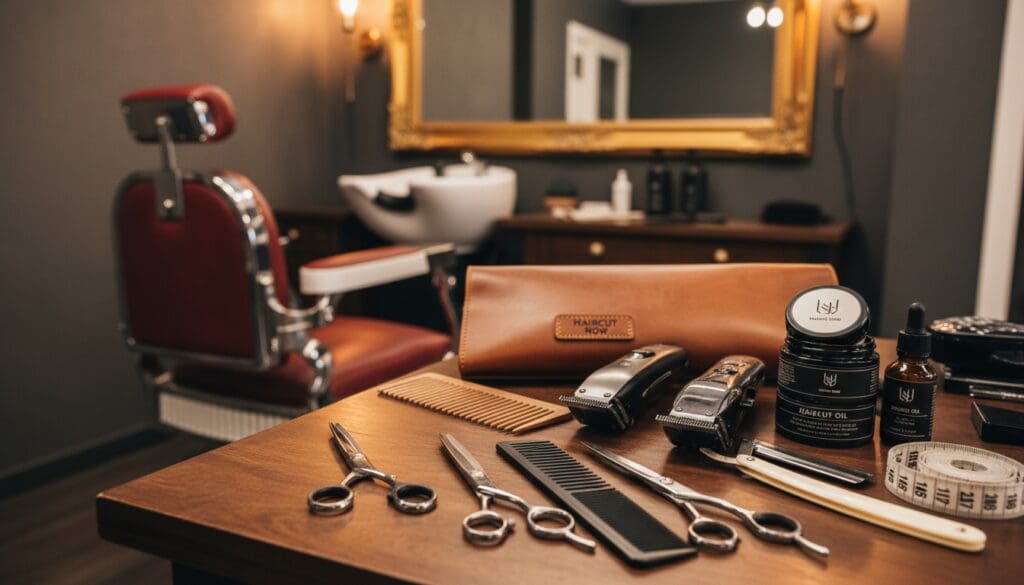
Clippers vs. Scissors: What You Need
Clippers are vital for creating buzz cuts, fades, and tapers. Barbers often create fades starting at the bottom, using different guards for blending. Then, they use a trimmer or outliner to perfect the edges, sideburns, and back of the neck.
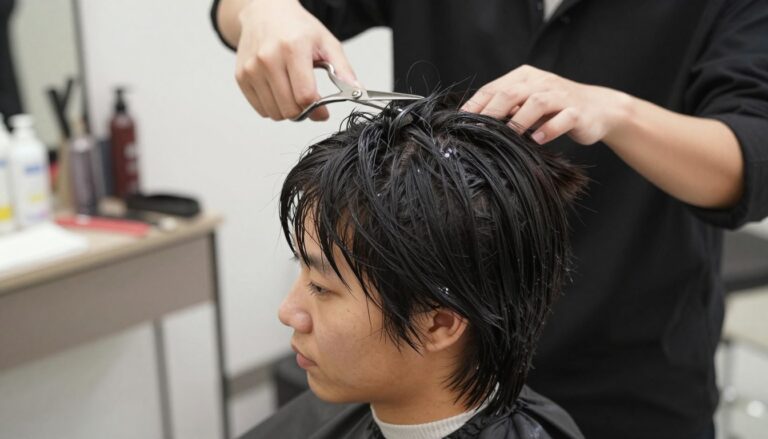
Scissors are used on top and for longer hair, offering more control. It’s best to cut hair while it’s slightly wet to keep things orderly, and use point-cutting to thin out hair without disrupting its natural flow. Straight hair, which can reveal every cut due to its flat nature, requires careful handling with clips and a comb.
- Clippers with various guard lengths for perfect blending and tapering
- Shears and thinning scissors for tailored shaping and thickness control
- Trimmer/outliner for precise edges and neat necklines
- Combs, sectioning clips, a spray bottle, and a cape for better handling and comfort
Importance of Quality Hair Products
Choosing the right products makes men’s styling simpler. For a modern look, opt for light products that allow movement without looking oily. They help maintain the style’s shape with a light texture, keep a matte finish, and stop hair from appearing flat.
- Styling cream for a flexible hold and soft shine
- Pomade for glossy looks in classic styles like pompadours
- Sea salt spray for added texture and volume in casual styles
- Clarifying shampoo to remove oils and residues for better styling
- Forte Series Hydrating Argan Oil for sleekness and taming flyaways
Maintaining Your Tools for Best Results
Keeping your gear clean means cleaner haircuts. Include sanitizing solutions and cleaning brushes in your kit and sanitize them regularly. This practice ensures safer services and maintains your equipment’s performance.
After each use, remove hair from your tools and disinfect them. Make sure the guards fit securely. Regular oiling of the clippers and replacing worn-out blades prevents pulling and ensures smoother blending and sharp outlines.
Finding the Right Barbershop Near You
When looking for the best barbers, focus on skill, not just price. Great grooming is all about technique. This means finding someone who excels in fades, tapers, and precise line work.
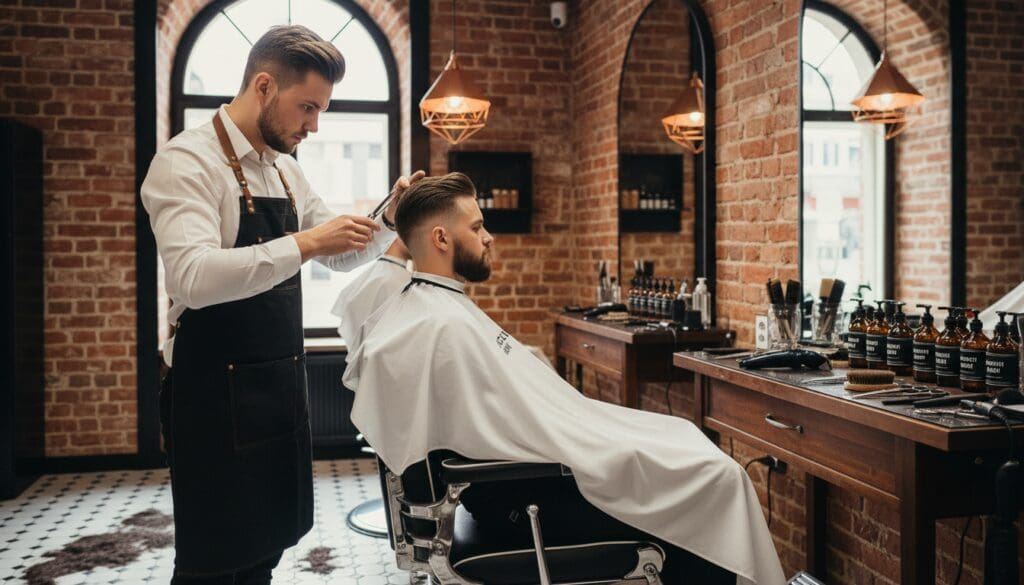
Researching Local Barbershops
Begin by checking the shop’s gallery for styles you like. Look for things like skin fades and pompadours. Notice the smooth blending and neat edges around the ears and necklines. This shows quality.
Look for signs of a barber’s careful work. These include detailed sectioning and gradual fading. Consistent quality in their photos means you’re likely to get a good cut too.
Reading Reviews and Recommendations
Reviews that mention specifics about the haircut are helpful. Look for notes on how well the barber communicates about your hair. (Second source, Third source) Good communication often means a better experience.
- Look for comments on timeliness, shop cleanliness, and how the haircut looks after a week.
- Reviews should mention precise lines and even cleanup.
- Happy repeat clients might note that barbers remember their preferences.
Making an Appointment: What to Expect
Bring a photo or two for reference. Share your preferences on length and fade. (First source, Second source) A detailed consultation is a good sign.
During your appointment, the barber should work methodically. You’ll see careful sectioning, gradual fading, and finishing touches. (Third source) The final details should look sharp and clean.
Maintaining Your Barbershop Haircut
Clean lines and neat edges are key to a barbershop’s signature look. With consistent grooming and smart care, a professional haircut can remain stylish for weeks. This is true even when your hair grows quickly.
Recommended Hair Products for Styling
Choosing the right products is the first step to great hair styling for men. Start with a compatible finish for your haircut and use a smaller amount of product than you might expect. For straight hair, skip the heavy stuff that makes it look oily. Instead, go for lightweight options like Forte Series Styling Cream or texture clay.
- Pomade: adds shine and control for styled looks such as pompadours and slick backs.
- Texture clay: gives a matte look and strong shape for dynamic hairdos.
- Molding paste: offers flexible control for layered and innovative styles.
- Styling cream: provides soft control and a natural gleam for flowing and fine hair.
- Texture powder: increases volume for hair that normally lays flat.
- Sea salt spray: creates a light texture and lifts the roots, perfect for a shaggy look.
- Forte Series Hydrating Argan Oil: smooths and shines for sleek hair and tames flyaways.
Frequency of Visits to the Barber
Getting a trim every 4 to 6 weeks keeps your haircut precise and stylish. This routine removes split ends and stops hair from looking unkempt as it grows. For fades, it maintains a neat blend around the ears and neckline.
Opt for small tweaks instead of complete overhauls, particularly when growing out the top. This approach retains a polished look through different hair lengths.
Home Care Tips to Extend the Style
Begin with a barber’s approach: use a clarifying shampoo and then condition. Towel-dry to just damp. Apply sea salt spray for volume; blow-dry to shape. Finish with texture clay or styling cream for hold.
Don’t forget scalp care. Moisturize to avoid dryness, especially with close fades or in cold weather. This is key in winter or after sweating a lot.
On days off, rinse thoroughly and opt for lighter styling products. This routine keeps your hair manageable. It makes grooming simple and hairstyling effortless.
The Role of Barbers in Achieving the Perfect Look
The best barbershop haircuts don’t just happen. A skilled barber looks at your head shape and hair growth. They also consider your daily routine before cutting your hair. This approach makes men’s grooming feel simpler, as the time spent in the barber’s chair is more than just a quick visit.
Skillsets of Professional Barbers
Expert barbers create a balanced style, then perfect it with neat lines and precise weight. The key to a sleek fade versus a choppy one lies in precise blending. This matters a lot at the crown, where hair can sometimes stick out or swirl.
Straight hair requires careful attention to every clip, so barbers use detailed sectioning and sometimes texturizing shears. Curly hair needs to be cut curl by curl, either dry or slightly damp, considering how much it shrinks. Black hair takes skilled clipper work, sharp edging, and the right moisture and tools.
Barbers are trained to sidestep common errors, like mishandling tapers or not sanitizing tools properly. They also know not to cut wet textured hair too short.
Building a Relationship with Your Barber
Talking about your daily hair routine can lead to better haircuts. Share what tools and products you use, like pomades or matte pastes. Also, tell them how often you plan on getting trims. This info helps your barber suggest what will work best for you.
Having this chat lets your barber figure out the best fade height and neckline for you. It makes styling easier and keeps your hair looking good from one visit to the next. This way, even small changes to your haircut will look great.
Customizing Haircuts to Fit Your Personality
If you prefer something easy but stylish, consider a crew cut with a fade. It looks neat with minimal effort. For something simple yet striking, a buzz cut with a mid fade makes maintenance a breeze.
For those wanting to stand out, a pompadour or slick back with a skin fade adds height and contrast. A hard part or high skin fade can make a statement. A faux hawk or spiky hair adds fun texture without being too much.
Trends in Men’s Haircuts for the Upcoming Year
Next year’s men’s hairstyles mix vintage charm with modern flair. Barbers focus on making hair look polished and neat from all sides. These styles are not only easy to manage but also make you feel unique.
K-pop is making curtain bangs more popular, creating a look with a centered part that highlights the face. For easy styling, blow-dry forward, brush back, then use fingers to part. Finish with styling cream for a flexible hold. The mullet, updated with fades, adds a fresh twist.
Hair color is becoming more sophisticated, rather than louder. Precise cuts and fades highlight the color changes, making clean lines vital. This is especially true for straight hair, as it showcases any imperfections more clearly.
Adopting sustainable grooming habits also helps keep hair looking its best. Limit shampooing to 2-3 times a week to avoid oiliness. Use a gentle conditioner and avoid rough drying to keep hair healthy and vibrant. Choose light styling products to prevent hair from getting greasy. Moisturizing the scalp is key, especially with close skin fades, to avoid dryness.