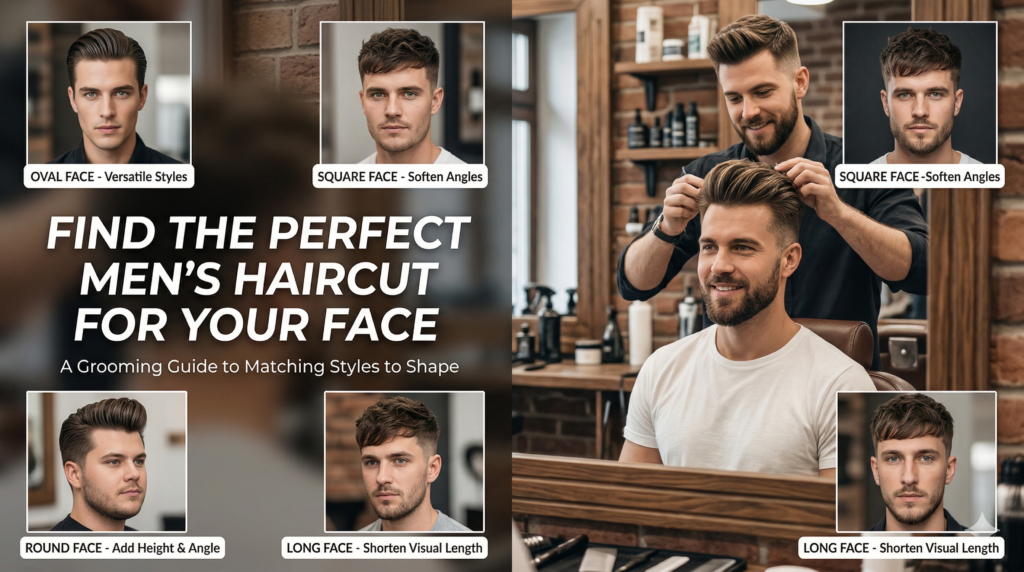
What if the best men’s haircuts are more about your face shape than trends on TikTok?
Most guys choose hairstyles from a photo, hoping it looks good in real life. But the key to a great haircut is balance. It can make your jaw look sharper, ease strong angles, or evenly distribute your features.
This guide makes finding the right haircut simple, with easy steps. Before sitting in the barber’s chair, consider your face shape and hair type (straight, wavy, curly, or coarse). Think about how your hairstyle needs to hold up in your daily life.
Want to try out haircuts before the cut? Use a free online male haircut simulator. Upload a photo, check out over 40 men’s hairstyles, adjust hair color and volume, and try a beard filter. It’s a quick way to see what works for you.
Talking well with your barber also plays a big role in good grooming. Knowing what you like and why makes it easier for your barber to give you a haircut that fits your style, job, and confidence.
Key Takeaways
- The right men’s haircuts should match your face, not just what’s popular.
- Starting with your face shape is wise when picking a hairstyle.
- The type of hair you have affects the styles you can pull off.
- Your lifestyle influences the kind of maintenance your haircut will require.
- Using a free online haircut simulator can quickly narrow down your choices.
- Talking clearly with your barber means better haircuts and grooming.
Understanding Men’s Haircut Styles
Most men’s haircuts fall into a few categories. Knowing the basics helps you choose better. Aim for a haircut that suits your lifestyle and how your hair naturally grows.
Trends in men’s hair focus on the specifics, not just names. Consider the sides, top weight, and any front fringe. Because of this, trendy cuts can vary greatly from one person to another.
Popular Haircuts for Men
- Buzzcut and blonde buzzcut, plus the clean bald look
- Crew cut and the classic side part
- Slick back, pompadour, textured quiff, and textured crop
- Taper fade options, including a grey taper fade and a messy tapered fade
- Wavy undercut, split mini fringe, textured comma, and short curly
- Classic wavy, medium tousled waves, messy surfer cut, and surfer waves
- Layered bob, long wavy, long wavy blonde, and relaxed waves
Characteristics of Each Style
Short styles like a buzzcut or bald look are neat. They’re easy to manage and stay sharp as they grow. They’re great for a low-maintenance, clean look.
Structured styles need more care. Think classic side parts or pompadours. They keep the top long and styled up or back. Using a blow-dryer and some product makes a big difference.
For texture, go with choppy layers on top. Styles like the textured quiff or crop look vibrant. They often shine with a matte product and a bit of messiness.
Fades blend the sides into the neck smoothly. A grey fade is modern but looks natural. The fade is key, whether the hair on top is short or long.
Wavy and longer cuts use layers to manage bulk. This lets hair flow nicely. Surfer cuts capture a breezy, beachy vibe.
Finding the Right Look for You
Start with what balances your face. Tight sides can make the top seem taller. Your hair type is important too, as wavy hair can add volume.
Think about how much time you want to spend styling. A slick back needs more effort than a crew cut. Most men’s cuts require regular trims to stay sharp.
If unsure, try hairstyles online first. Upload your picture, pick a style, and compare them side by side. It’s an easy way to see what works for you.
Consulting Your Barber or Stylist
Talking to your barber before they start is key. This chat ensures you get cuts that suit you well. Good barbershop experiences are based on planning, not just paying.
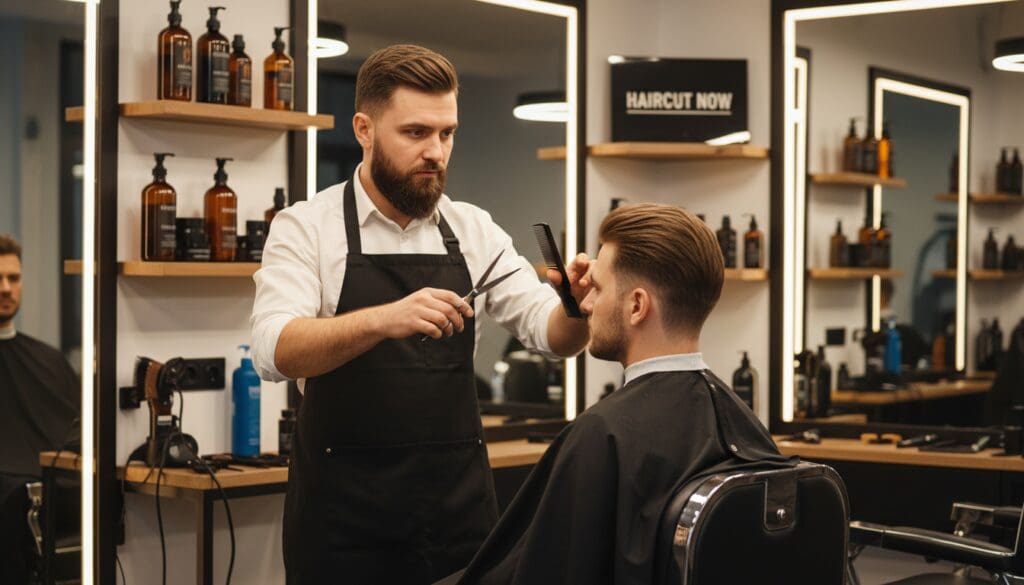
Shops like Harold’s Barbershop in Irvine focus on making sure your haircut highlights your best sides. At FINO for MEN, they pick tools and products that fit your life. This approach turns simple haircuts into useful grooming tips for every day.
Questions to Ask
Here’s a checklist to make sure you get what you want from the barbershop.
- Which styles work best for my face shape, and why?
- How would you adapt this cut to my features, like my hairline, crown, or jaw?
- What upkeep should I expect: daily styling time, product needs, and blow-dry use?
- How will my natural texture (straight, wavy, curly, or coarse) change the final look?
- How often do I need clean-ups for fades or tapers to stay sharp?
These questions also help set a clear standard for professional barber cuts, especially if you are switching styles or growing your hair out.
How to Communicate Your Vision
Bring a few photos for reference from haircut galleries or your own collection. If you’ve used an online hair app, show those styles to your barber. It helps keep the visit focused and efficient.
Be clear about how long you want your hair on top and the sides. Also, tell them what you definitely don’t want. Saying things like “no heavy fringe” makes it clear. Share details about your daily life too. For example, this could be needing a neat taper for work or a longer style for a creative vibe. These easy grooming tips make sure you look right, whether at work or school.
Face Shapes and Suitable Haircuts
Before picking a haircut, spend two minutes checking your face shape in front of a mirror. Make sure the lighting is good, push your hair back, and grab a soft tape measure. Note your measurements so your barber can find the best haircut for you.
Measure in inches:
- Forehead: Measure across the widest part, usually found mid-forehead.
- Cheekbones: Measure from one outer edge of a cheekbone to the other.
- Jawline: Measure from the chin’s tip to below the ear, then double that number.
- Face length: Measure from the center of your hairline down to the chin’s tip.
Look at your length versus width. See if your forehead or jawline is wider. Knowing this helps choose grooming styles that enhance your natural features.
Round Face Haircuts
Round faces usually have soft angles and a wide jaw. They are almost as wide as they are long. Aim to make the face seem longer and more defined.
- Consider a pompadour with more volume on top and tighter sides.
- Try a textured quiff or a classic side part with a neat taper.
- Avoid bowl cuts and heavy bangs that make the face appear wider.
For round faces, hairstyles with a taller top and shorter sides give a longer appearance.
Square Face Haircuts
Square faces are marked by a strong jawline and broad forehead. The widths of the forehead, cheekbones, and jaw usually are similar. You can accentuate or soften these features.
- To highlight the shape, choose a short buzz cut with clean lines.
- For a softer look, select styles with layers that bring movement.
- A side-parted style combines angles and elegance flawlessly.
Adding a precise beard line-up enhances the jaw, making for a more defined look.
Oval Face Haircuts
Oval faces are usually well-balanced, with a slightly narrower jaw than cheekbones. They’re more elongated than wide, fitting many hairstyles well.
- Opt for timeless looks like a slick back or neat side part.
- Choose modern cuts like a textured crop styled forward or upwards.
- For longer hair, try styles that flow with light layers.
If you have an oval face, be careful not to add too much height on top.
Heart-Shaped Face Haircuts
Heart-shaped faces have a wider forehead and a narrow, pointed chin. The aim is to lessen the width at the top and add balance at the jaw.
- A crew cut makes the forehead look neat without shrinking the chin.
- A buzz cut creates a clean, even head shape.
- Medium, textured styles spread the volume evenly.
If your chin seems too narrow, consider a fuller beard to add volume where needed. Barbers can tailor most haircuts with slight changes to suit your facial features better.
Trending Men’s Haircuts for 2023
These men’s haircuts are popular because they look great not only in pictures but in real life too. The best styles match your face shape, hair texture, and styling time.
When you’re looking at trendy cuts for guys, consider balance. Tighter sides can make a round face look slimmer. Extra height up top can add structure. Also, a neat neckline and trimmed beard lines complement most male hair trends well.
The Fade
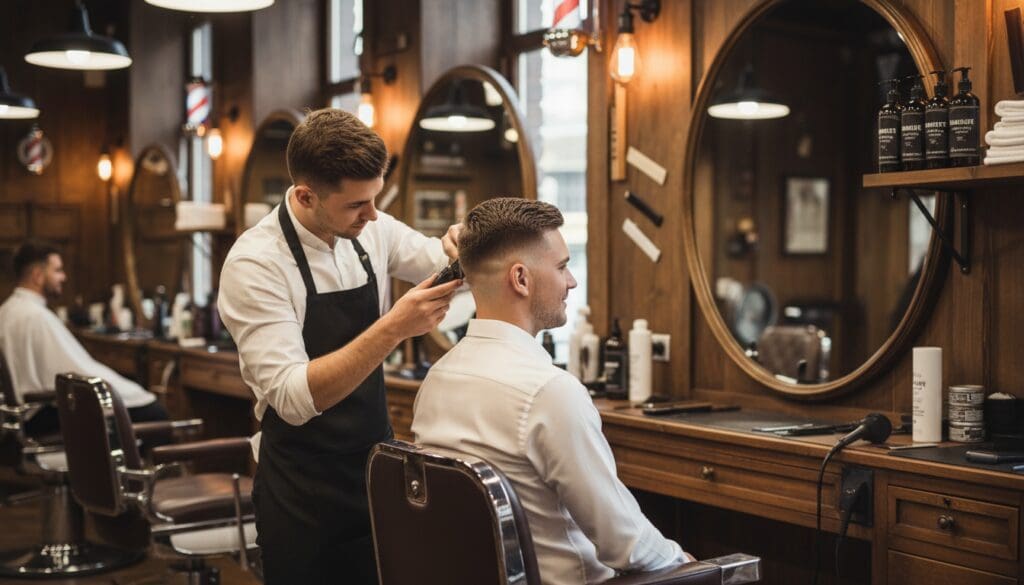
The fade haircut keeps your look balanced and sharp. It’s ideal if you want a hairstyle that looks tidy as it grows out.
- Grey taper fade: Offers a soft finish that looks professional and blends smoothly.
- Messy tapered fade: The sides are neat while the top is textured and relaxed.
Fades also work well to make round faces appear more squared by slimming the sides. They’re easiest to maintain with regular haircuts and beard trims.
Textured Crop
The textured crop is a modern hairstyle that adds angles and a bit of height. It makes round faces look longer and suits oval faces naturally.
Using a haircut simulator with photos often suggests the textured crop. It’s a practical male hair trend that looks styled with minimal effort, thanks to a bit of paste.
Undercut Styles
Undercut styles feature long hair on top with shorter sides. The look varies with how you style it, so your hair’s texture is important.
- Wavy undercut: Uses natural waves on top for style, with clean-cut sides.
This trendy haircut can quickly go from polished to laid-back. A bit of blow-drying adds volume, and styling cream gives a softer finish.
Long Hairstyles
Long hairstyles top the list for men wanting a dynamic and expressive look. They require more care, but it pays off when you regularly condition, detangle, and trim.
- Long wavy and long wavy blonde: These styles are high on volume but need color maintenance.
- Layered bob: Shapes long hair to prevent it from looking flat.
- Surfer waves and relaxed waves: Have a laid-back texture but must be kept moisturized and frizz-free.
Test these male hair trends with a photo-based haircut simulator before committing. It’s a clever way to check if a style matches your creative or conservative image.
Hair Care Tips for Different Haircuts
The best haircut is one that stays sharp between visits. These grooming tips make daily care easy for men. It’s all about knowing what your haircut needs from you every day.
Maintaining Short Haircuts
Buzz cuts, crew cuts, and taper cuts are great when you’re busy. A quick wash, some light conditioner, and a towel-dry are all you need.
Fades and tight tapers need less styling but require more frequent touch-ups. At your barber, ask how often to return so your haircut grows out nicely.
- Keep your neckline and sideburns neat between barber visits.
- Use a gentle cleanser after working out to remove sweat from short hair.
- Apply a small amount of matte product to manage any unruly hair.
Caring for Longer Styles
Longer hairstyles need more daily attention and effort. Wavy, layered, and long hair require shaping over time, not just trimming.
Pick a routine that suits your hair. Coarse hair likes moisturizing products and a leave-in for less frizz. For curly or wavy hair, use a cream or mousse to define curls instead of brushing.
- Detangle with a wide-tooth comb or fingers, especially when hair is damp.
- Blow-dry on low for control or air-dry for a softer look.
- Get regular trims at the barber to keep ends and layers looking good.
Styling Products for Men
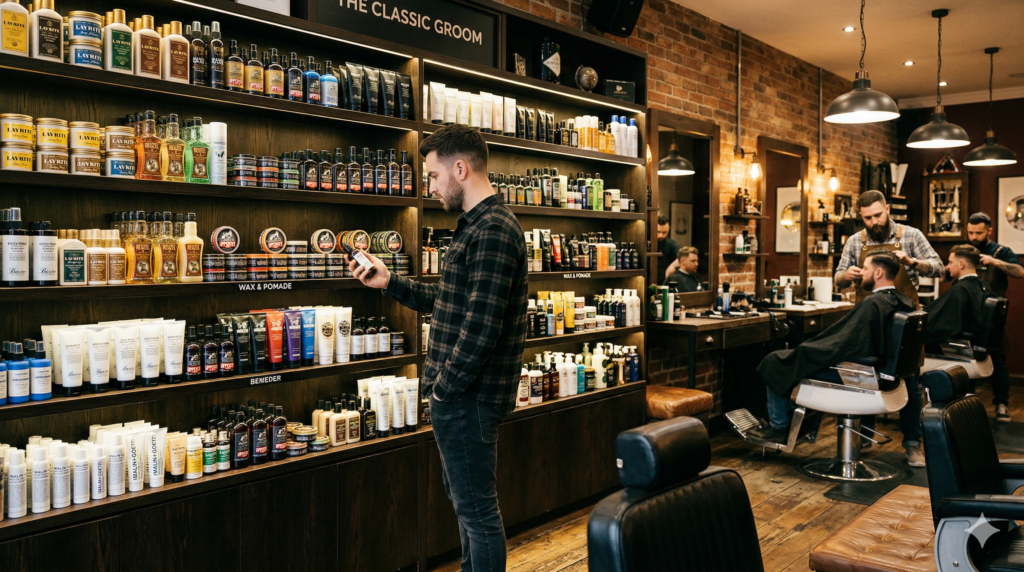
Products are key and shape the final look. Whether it’s a textured crop, quiff, sleek back, or wavy style, the product you use matters. Many barbers offer grooming tips and simple routines, helping you maintain that salon-fresh look.
Essential Products for Every Haircut
Focus on what you need, not just what’s popular. Choose a few products that work for most men’s haircuts.
- Texture + flexible hold: matte clay or paste for that easy, textured look.
- Stronger hold + shine: pomade or styling cream for classic styles.
- Volume + lift: mousse or sea salt spray prevents hair from looking flat.
- Moisture + control: leave-in conditioner or light oil for softer, frizz-free hair.
How to Choose the Right Product
Pick a product that fits your hair type and routine. Getting the right style is all about this match.
For straight hair, try sea salt spray and paste for more body. Wavy hair? Go for creams that add bounce without stiffness. Curly locks do well with curl creams and leave-ins for definition and moisture. And if you have coarse hair, ingredients like shea butter or argan oil are great.
Think about your daily routine, too. If you’re always in a rush, choose a versatile product for wet hair. If grooming is part of your daily routine, start with a pre-styler, then add a finisher for hold.
Application Tips for Best Results
Start with a small amount. Warm it up between your hands, then work through your hair from back to front. This technique avoids product build-up at the front.
For more control, apply to damp hair and blow-dry as desired. For a more relaxed style, apply to dry hair and use fingers to shape. Ask your barber for specific product recommendations for your cut and texture. Following their advice will help keep your look consistent.
Haircuts for Different Hair Textures
Hair texture impacts the way a haircut looks and grows out. The best haircuts work with your hair’s natural flow. Matching your cut to your texture means easier styling and a better look.
Straight Hair Options
Straight hair might seem flat, especially at the top and front. To add volume, ask for layers or point cutting. Barbers add these small details that make a big difference on straight hair.
- Textured crop to break up the front and add movement
- Clean side part with a shaped top so it doesn’t lie down flat
- Low taper with light texture on top for easy styling
Curly Hair Solutions
Curly hair looks better with the right shape, not just a trim. A short cut can keep your curls neat and well-defined. A skilled barber knows how to manage volume, keeping it where it looks good.
Talk about how your curls shrink or feel when dry. With proper cutting and fading, your haircut can look stylish yet natural.
Wavy Hair Favorites
Wavy hair suits a laid-back, textured look. Medium-length waves offer a neat but easygoing style. They also grow out nicely. Waves give haircuts an added dimension, making many styles look great.
- Classic wavy cut with a light taper on the sides
- Messy surfer cut with longer layers on top
- Wavy undercut to create contrast and shape
If you’re not sure about the length, consider a hairstyle simulator before your visit. It lets you explore how changes in length or volume might look. Then, you can choose a barber cut that suits your style and stays trendy.
Seasonal Haircut Trends
The weather affects how your hair acts and your styling time. Top male hair trends suit heat, humidity, hats, and dry conditions. Choosing a haircut for the season keeps your look sharp and makes styling simpler.
Spring and Summer Styles
In warm weather, men prefer lighter and neater haircuts. Options include fades, tapers, buzz cuts, crew cuts, and short textured styles. These dry quickly and stay tidy with minimal effort. A clean fade also ensures a balanced look as your hair grows.
- Ask for a low or mid taper if you want less upkeep between visits.
- Choose a textured crop if your hair gets puffy in humidity.
- Keep sideburns and the neckline clean to make men’s hairstyles look fresh longer.
Fall and Winter Inspirations
When it’s colder, men choose styles that work with layering clothes. Popular are textured quiffs, long wavy styles, and layered cuts. These fit well under hats without going flat. They give your hair shape when it feels dry.
Longer hairstyles need a bit more planning. To manage frizz and keep your look even, use a blow dryer, vent brush, and light styling cream. If you’re often in a hurry, opt for quick-styling layers that stay neat.
How to Prepare for Your Hair Appointment
Getting a great haircut begins well before you’re in the barber’s chair. Planning ahead can enhance the barbershop experience. It also makes requesting professional cuts less intimidating.
Follow these men’s grooming tips to arrive prepared. This ensures you and your barber are on the same wavelength. Plus, you’ll walk out with a style that suits your daily life.
Timing Your Appointment
Choose when to book based on your hairstyle’s durability. For fades or tapers, get frequent trims to maintain those sharp edges.
If growing your hair, opt for regular minor trims instead. This keeps your neckline and sideburns tidy. It also avoids that awkward mid-growth look.
- Pick a time when you’re not rushed and can have a chat.
- Coming in with hair that’s clean and dry helps your barber best see its natural state.
- Be clear about what you want: something easy to manage, fuller looking, or crisply defined.
Bringing Reference Images
Having clear images makes explaining your desired cut easier. Save a few pictures from hairstyle galleries or tutorials that show all angles.
Consider using an online hairstyle simulator. It allows you to upload your picture, try different looks, and find your best style to show your barber.
- Have 2–3 photos of the style you want and 1 showing what you don’t.
- Ensure the hairstyles in your images can work with your hair type for a realistic outcome.
- Test out a beard style as well, to ensure your hair and beard complement each other.
Common Haircut Mistakes to Avoid
A great haircut can quickly go wrong if you’re not clear about what you want. These tips for men’s grooming help keep conversations simple. They ensure your haircut looks good at home and in the barbershop.
Over-Communicating
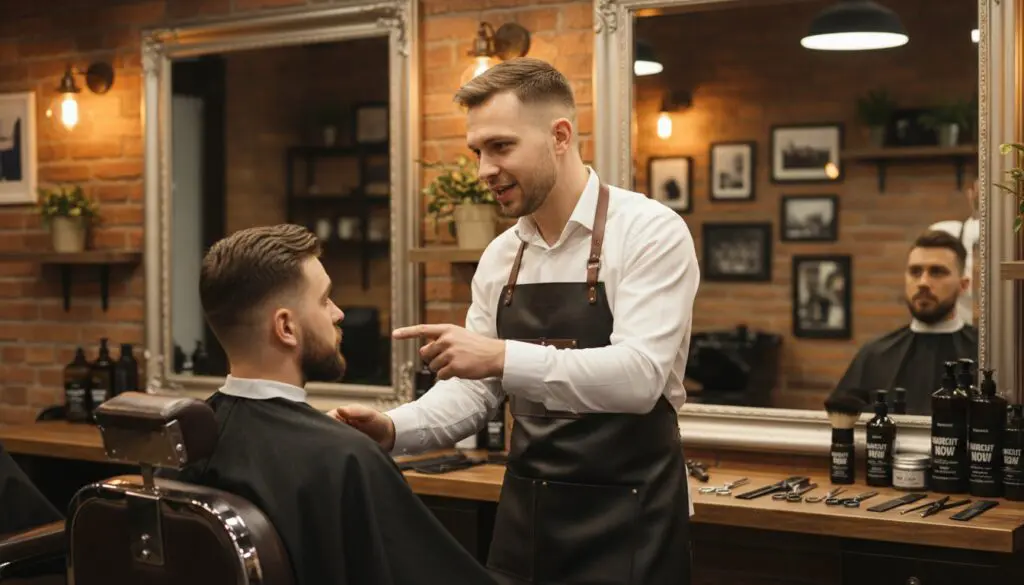
- Do this: Bring 1–3 photos that show the haircut you want.
- Not that: Don’t show too many photos with different styles and lengths.
- Do this: Describe what you want in simple words, like “keep the top long,” “low shine,” or “more volume at the front.”
- Not that: Avoid giving mixed instructions that don’t prioritize what you want most.
- Do this: Tell the barber what you don’t want, then trust them to tailor the cut to your face and hair type.
- Not that: Don’t control every detail and change your mind during the haircut.
Ignoring Hair Type
- Do this: Choose a haircut that suits your natural hair type—be it straight, wavy, curly, or coarse.
- Not that: Don’t pick a style that works well with another hair type or requires daily styling if that’s not for you.
- Do this: Remember, different hair types yield different looks. Wavy and curly hair adds volume, while straight hair shows precision cuts more clearly.
- Not that: Don’t expect a haircut to look the same on you as it does in a photo if your hair type is different.
- Do this: View the right product as crucial to your haircut. Use light cream for waves or matte paste for straight hair.
- Not that: Don’t choose styling products as an afterthought and then be puzzled when your hairstyle doesn’t hold.
For men, good grooming is about being clear with your barber, having realistic expectations, and choosing a style that fits your daily routine. This is how you keep your haircut looking good between barbershop visits.
Transitioning Between Haircuts
Changing men’s haircuts can sometimes feel a bit odd for a couple of weeks. But it starts to get simpler if you have a plan. Making sure it looks like you meant to change styles is the trick. As your hair grows, you might need to spend more time on it every day. So, plan your haircut changes around your schedule and how long you’re willing to style your hair.
How to Move from Short to Long
When letting a short style like a buzz cut grow out, be ready for it to look uneven at times. The hair on top might grow faster than the sides. That’s why being patient is crucial. The focus during this period is on managing small adjustments, not making big changes.
- Choose a haircut that grows out nicely, like a longer crew cut with some layers.
- Keep the hair neat around your neck and ears by trimming it as it grows.
- Start with lighter hair products and switch to heavier ones as your hair gets longer.
Barbershop Strategies for Change
Don’t wait for your hair to start looking uneven. Make short visits to the barber to keep everything in proportion as it grows. Your barber can adjust the length on the top and sides so your hair doesn’t puff out at the sides. These visits are also a chance to make sure your hair isn’t thinned out too much, which can make it seem like it’s taking forever to grow.
For the best plan, talk about your daily routine, how often you can get to the barber, and what tools you like to use. This conversation at places like FINO for MEN and Harold’s can help pick the right products. It makes sure men’s grooming suits your hair’s changing length and texture. This way, your haircut stays looking great, every step of the way.
Finding a Barber You Trust
Getting a great haircut is easy when you find a barber you trust. The best places offer steady services, really listen, and give you a style that fits both your face and lifestyle. This kind of reliability is what keeps you coming back.
First, look at local reviews online, then check out the shop’s photos. You want to see well-done fades, nice textured looks, and styles that stay neat for weeks. Harold’s Barbershop in Irvine is known for its detailed work, focusing on balance and what’s best for you. FINO for MEN in Las Vegas and Summerlin is great for its one-on-one consultations, making sure you get a cut that’s right for your hair and goals.
Once you find a good spot, try to see the same barber each time. They’ll get to know your hair’s quirks and how you like to style it. This understanding allows them to provide services that feel custom-made, not rushed.
At every appointment, ask for advice on simple grooming tips: When to trim your neckline, which products to use, and any small tweaks to improve your look. These quick talks let your barber adjust your cut so it always fits your style and personality.
 and select